Concrete Floor Grinding
Concrete floor grinding uses coarse diamond tooling to cut material off a slab in order to flatten it, strip coatings and adhesives, or open the surface profile before a new floor goes down.
- Free estimate, no obligation
- Priced after we see the floor — not over the phone
- Residential and commercial
- Poured concrete slab
- Concrete with epoxy or paint
- Slabs with carpet or tile adhesive
Get a Concrete grinding Estimate
Three quick steps, about a minute. No obligation.
Floor Types & Materials
Reviewed July 2026.
Materials we work with
- Poured concrete slab
- Concrete with epoxy or paint
- Slabs with carpet or tile adhesive
- Screed and levelling compound
Where this is used
- Garages
- Basements
- Warehouses
- Retail units under renovation
- Loading areas
Problems We Solve
Old adhesive and coatings
Carpet glue, mastic and failing epoxy stop any new floor from bonding. Grinding takes them back to sound concrete.
Trowel ridges and high spots
Power-trowel waves and slab lippage telegraph through vinyl and tile. Flattening passes bring the surface into tolerance before installation.
Poor bonding profile
A dense, closed slab surface refuses to grip new coatings. Grinding opens a mechanical profile so the next system anchors properly.
Trip hazards at joints
Slab edges that have lifted at joints and cracks are cut flush, removing the hazard without breaking out and repouring the section.
How It Works
-
Survey and tooling choice
Slab hardness and what sits on top decide the diamond bond and grit — the wrong pairing either glazes over or gouges the floor.
-
Containment and dust control
HEPA-filtered extraction runs at the head, because dry concrete grinding without containment puts respirable silica through the whole building.
-
Bulk removal
Coarse metal-bond passes take off coatings, adhesive and high spots in overlapping runs across the full area.
-
Edge and corner work
Hand grinders reach the perimeter, columns and door thresholds that a walk-behind machine physically cannot.
-
Profile check and cleanup
We verify the surface profile against what the next system needs, then vacuum the slab so no dust interferes with bonding.
Typical timeline: 1–3 days for most residential and small commercial areas
Straight flattening moves quickly. Coating removal is the variable that stretches schedules, and any subsequent coating or polish adds its own cure and refinement time on top.
Looking after the floor afterwards
Keep the slab clean until the next step
A ground slab is open and absorbent. Oil, paint or dirt landing on it before the next system goes down becomes a bonding defect.
Do not delay the follow-on system
An open profile left exposed collects contamination and moisture. Coating or sealing on schedule protects the prep work.
Protect from traffic
Bare ground concrete marks easily. Keeping vehicles and racking off it until the finish goes down avoids re-prep.
Before & After: How These Finishes Look
What concrete grinding looks like across different materials and sheen levels.


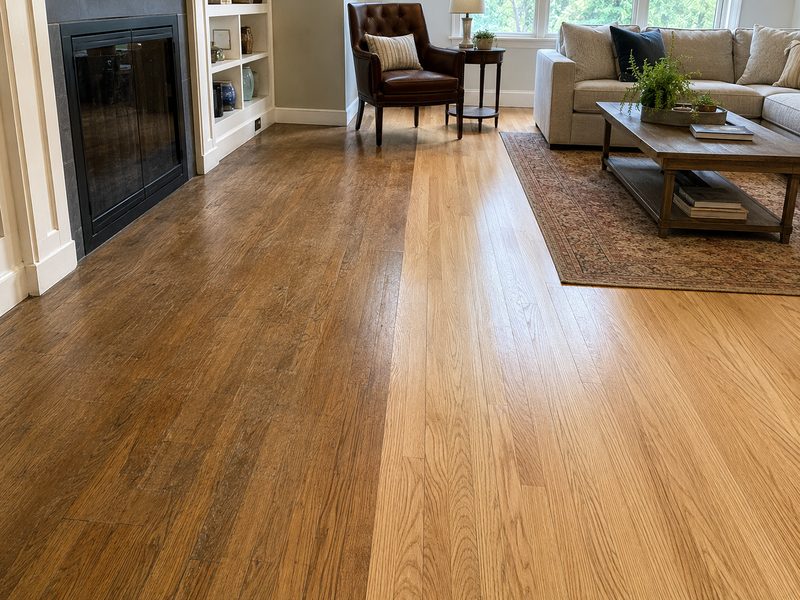
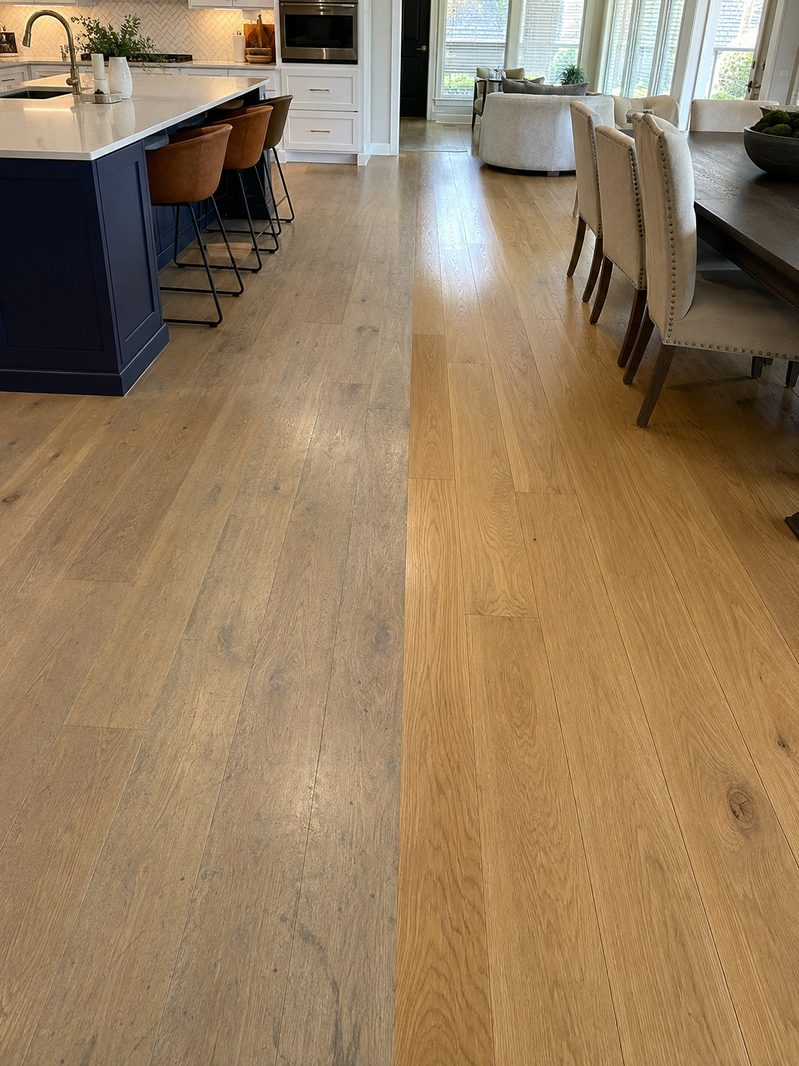
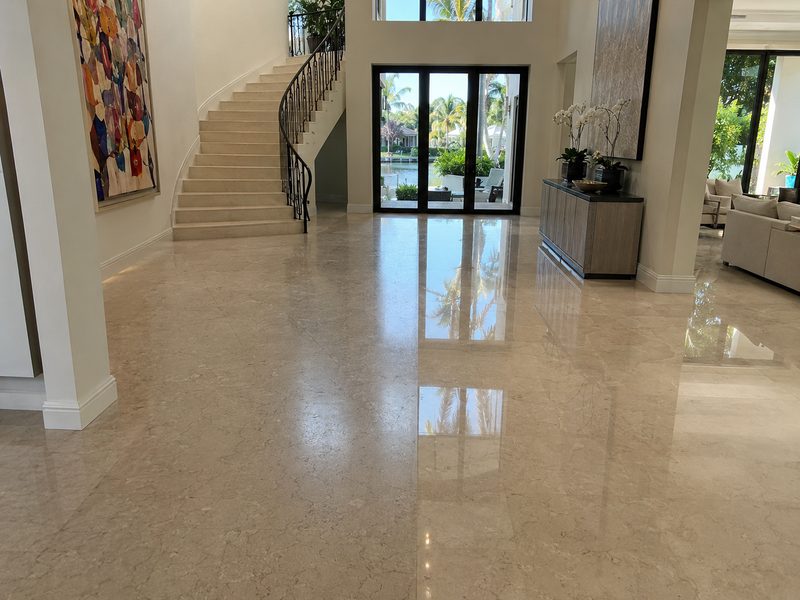
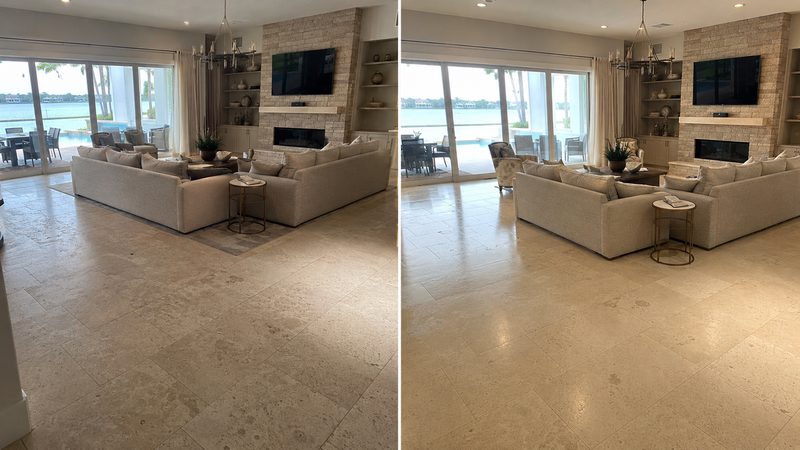
Illustrative examples of materials and sheen levels, not photographs of completed customer jobs.
Finish & Sheen Options
The sheen level changes both how the floor looks and how much upkeep it asks for.
Bond profile
Deliberately open and rough. This is the handover state when a coating, overlay or adhesive follows.
Flattened slab
Level and clean, ready for vinyl, tile or a polishing sequence to begin.
Residential & Commercial
Residential
- Garage floor prep before coating
- Basement slab levelling
- Adhesive removal after carpet or tile
- Threshold and joint lippage correction
Commercial
- Warehouse slab flattening
- Retail fit-out floor prep
- Epoxy removal in kitchens and plants
- Loading dock repairs
What Affects the Cost
Every floor is priced after we have seen it. These are the variables that move the number.
What is on the slab
Bare concrete grinds quickly. Thick epoxy, urethane cement or layered mastic can multiply the number of passes and consume tooling far faster.
Flatness target
Cosmetic flattening is one thing; hitting a specified tolerance for a resilient floor is another, and the tighter the target, the more material has to come off.
Dust containment requirements
Occupied buildings, food premises and hospitals need negative-air setups and stricter containment than an empty shell.
Edge proportion
Hand-ground perimeter runs at a fraction of machine speed, so a floor cut into many small rooms costs more per square foot than one open bay.
Debris disposal
Removed coatings and slurry have to leave site. Volume and material type drive the disposal line.
Request a Concrete grinding estimate
Send the material, approximate area and a few photos, and we will take it from there.
Get a Free EstimateWhere We Offer Concrete Floor Grinding
Select a state to see the counties and cities currently covered.
Why Work With Us
Written estimate after inspection
We price the floor after seeing it, not from a phone description. The estimate sets out scope and the variables that could change it, so there are no discoveries mid-job.
Material identified before work starts
Marble, limestone and travertine look alike and behave differently under the same abrasive. We confirm what the floor actually is and test in a discreet area before committing to a method.
Dust controlled at source
Grinding and sanding run with HEPA-filtered extraction at the tool head and containment between work and occupied areas, because concrete dust is a health matter rather than a tidiness one.
Written maintenance plan on handover
You get the products, dilutions and intervals that keep the finish alive, since most floors we are called back to were damaged by cleaning rather than by use.
Frequently Asked Questions
Grinding is material removal — it flattens, strips and profiles. Polishing is refinement that follows, taking the surface through finer grits to a sheen. Every polishing job starts with grinding, but plenty of grinding jobs stop once the slab is flat and clean.
A great deal, which is why extraction matters more than technique. HEPA-filtered vacuums at the tool head capture the bulk of it at source, and containment sheeting keeps the rest out of adjacent areas.
It can correct localised high spots and lippage. Correcting a genuine slope across a room usually means a levelling compound or overlay instead, because grinding to that depth risks exposing reinforcement.
It can if the tubing sits shallow, so heated slabs need the cover depth confirmed before any aggressive passes. Where records are missing we keep removal conservative.