Concrete Floor Polishing
Concrete floor polishing mechanically refines a slab with progressively finer diamond abrasives until the surface itself becomes the finish, producing a hard, light-reflective floor without coatings that peel.
- Free estimate, no obligation
- Priced after we see the floor — not over the phone
- Residential and commercial
- Poured concrete slab
- Concrete overlay
- Terrazzo-topped concrete
Get a Concrete polishing Estimate
Three quick steps, about a minute. No obligation.
Floor Types & Materials
Reviewed July 2026.
Materials we work with
- Poured concrete slab
- Concrete overlay
- Terrazzo-topped concrete
- Power-troweled industrial slab
Where this is used
- Garages
- Basements
- Kitchens and living areas
- Retail floors
- Warehouses
- Showrooms
Problems We Solve
Dusting slabs
Untreated concrete sheds fine powder as the surface paste breaks down. Polishing densifies the top layer so the slab stops releasing dust into the room and onto stock.
Peeling coatings
Epoxy and paint sit on top of the slab and delaminate under moisture pressure. A polished finish is the slab itself, so there is no film left to lift.
Stain absorption
Open concrete pores drink oil, wine and tyre marks. Densifier plus a penetrating sealer closes the capillaries and buys time to wipe spills up.
Uneven, patchy surface
Trowel marks, old adhesive and level changes read as shadows under light. Early metal-bond passes cut the high spots before any gloss work begins.
How It Works
-
Assessment and moisture check
We read slab hardness, existing coatings and moisture behaviour, because those three decide the starting grit and whether polishing is viable at all.
-
Coating and adhesive removal
Old epoxy, glue and mastic come off with metal-bond diamonds so the refinement starts on bare concrete rather than on a buried film.
-
Grinding to flatten
Coarse metal-bond passes remove trowel ridges and set the level of aggregate exposure — cream, salt-and-pepper, or full stone.
-
Densification
A lithium or sodium silicate densifier reacts with free lime in the slab and hardens the surface so it can hold a polish.
-
Resin polishing
Successive resin-bond grits refine the surface to the agreed sheen, each pass removing the scratch pattern of the one before.
-
Sealing and burnish
A penetrating stain guard goes in below the surface, then a final burnish sets the sheen and the floor returns to service.
Typical timeline: 1–4 days for most residential and small commercial floors
A clean two-car garage is usually a single day. Coating removal, heavy patching or large commercial areas extend the schedule, and each densifier and sealer step carries its own cure window before traffic returns.
Looking after the floor afterwards
Dust mop daily
Grit tracked in from outside is what actually abrades a polished floor. A microfibre dust mop removes it before foot traffic grinds it into the surface.
Neutral-pH cleaner only
Acidic and highly alkaline cleaners etch the densified layer. A neutral cleaner and clean water hold the sheen far longer.
Entry matting
Matting at every exterior door catches the abrasive grit before it reaches the slab and measurably extends the interval between burnishes.
Periodic burnish
A high-speed burnish restores sheen lost to traffic without repeating the full grit sequence.
Before & After: How These Finishes Look
What concrete polishing looks like across different materials and sheen levels.
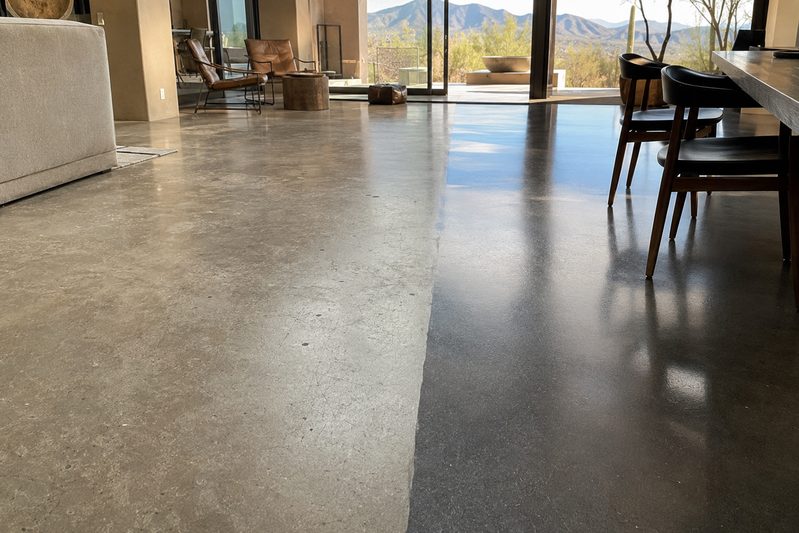
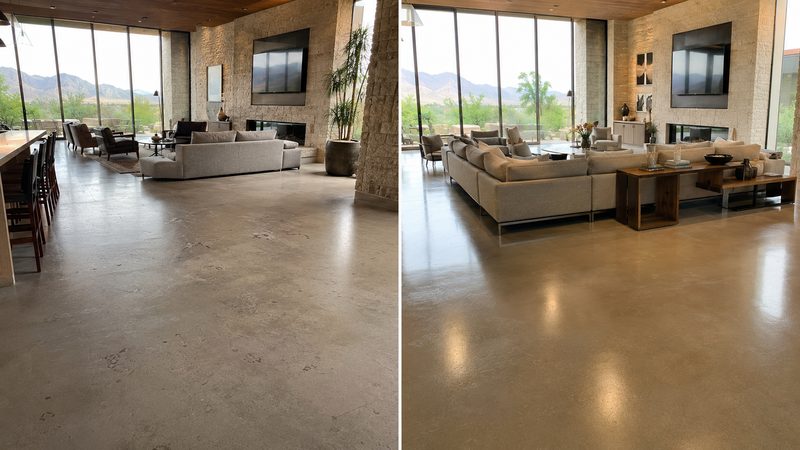
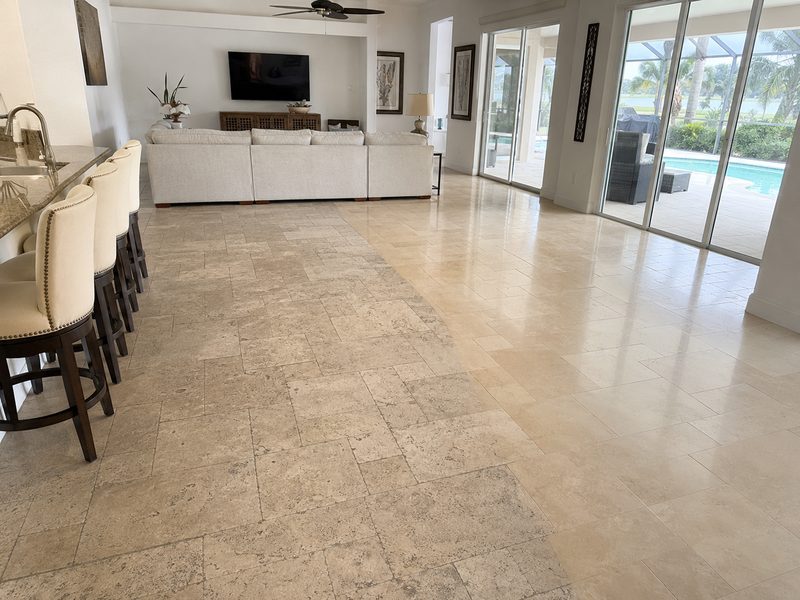
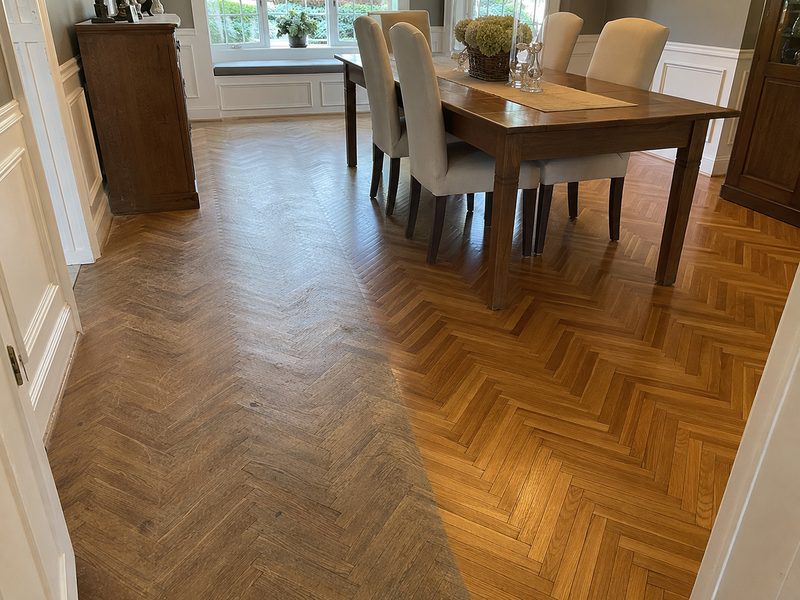
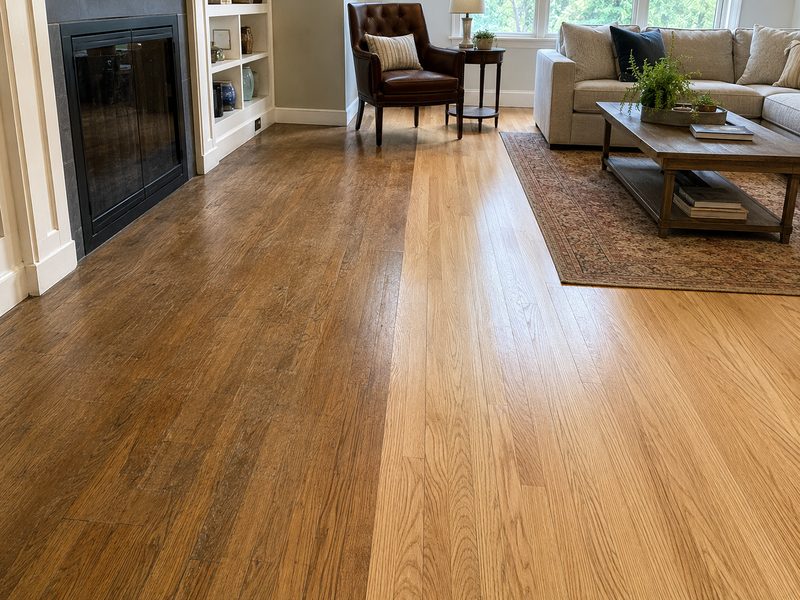
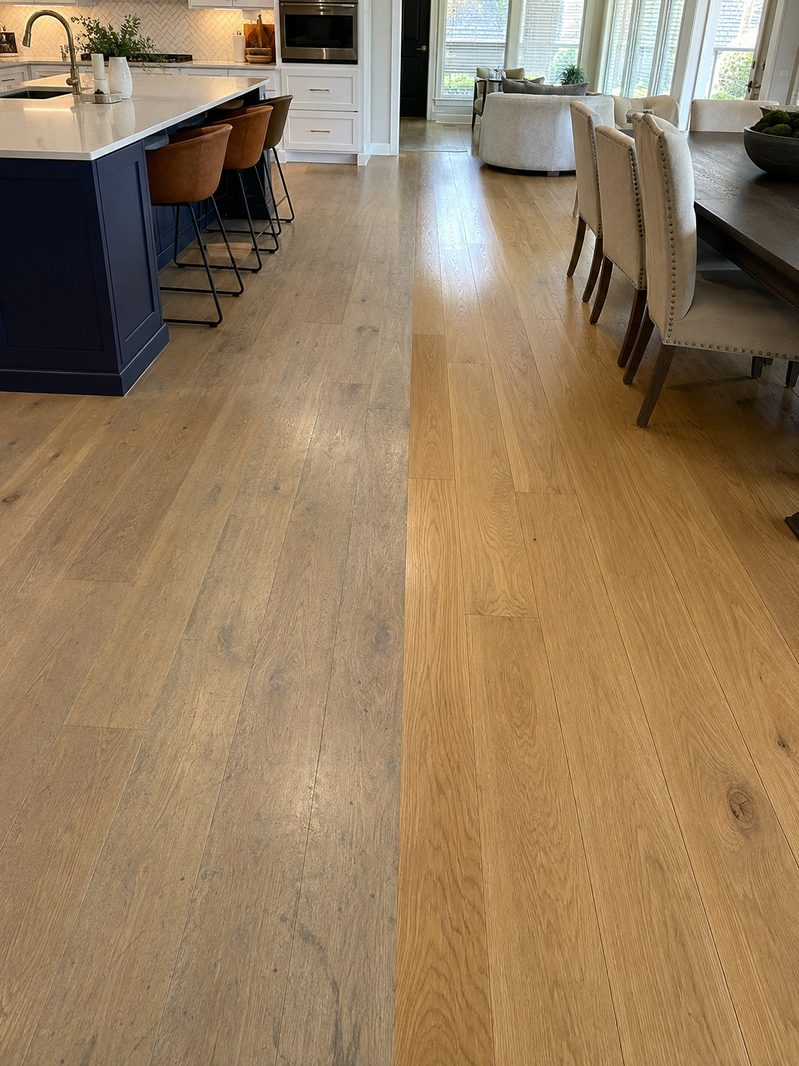
Illustrative examples of materials and sheen levels, not photographs of completed customer jobs.
Finish & Sheen Options
The sheen level changes both how the floor looks and how much upkeep it asks for.
Matte
Low reflection, hides traffic patterns, favoured in workshops and industrial aisles where glare is a hazard.
Satin
Soft even lustre with visible depth. The usual choice for residential basements, garages and back-of-house retail.
Polished
Clear reflection of overhead light without mirror distortion. Common in showrooms and cafés.
High gloss
Mirror-level reflection that shows off aggregate. Highest maintenance expectation and the most sensitive to a dirty entry.
Residential & Commercial
Residential
- Garage floors
- Finished basements
- Open-plan kitchens and living rooms
- Patios and sunrooms
- Laundry and utility rooms
Commercial
- Retail sales floors
- Warehouse and distribution aisles
- Restaurants and breweries
- Showrooms and galleries
- Schools and public corridors
What Affects the Cost
Every floor is priced after we have seen it. These are the variables that move the number.
Slab condition
A clean, flat, uncoated slab starts at fine grit. One carrying old epoxy, carpet glue or deep patching needs removal passes first, and that removal is the single largest swing in price.
Aggregate exposure
A cream finish stays near the surface. Full stone exposure means grinding down several millimetres across the whole area, which multiplies both machine time and diamond wear.
Target sheen
Each additional grit step is another full pass over every square foot. Moving from satin to high gloss can add several passes.
Area and layout
Open floor plans polish fast. Rooms broken up by columns, fixed racking and tight corners force hand-edge work, which runs far slower per square foot.
Site access and hours
Stair-only access, live retail hours or night work all change crew scheduling and equipment handling.
Request a Concrete polishing estimate
Send the material, approximate area and a few photos, and we will take it from there.
Get a Free EstimateWhere We Offer Concrete Floor Polishing
Select a state to see the counties and cities currently covered.
Why Work With Us
Written estimate after inspection
We price the floor after seeing it, not from a phone description. The estimate sets out scope and the variables that could change it, so there are no discoveries mid-job.
Material identified before work starts
Marble, limestone and travertine look alike and behave differently under the same abrasive. We confirm what the floor actually is and test in a discreet area before committing to a method.
Dust controlled at source
Grinding and sanding run with HEPA-filtered extraction at the tool head and containment between work and occupied areas, because concrete dust is a health matter rather than a tidiness one.
Written maintenance plan on handover
You get the products, dilutions and intervals that keep the finish alive, since most floors we are called back to were damaged by cleaning rather than by use.
Frequently Asked Questions
A dry polished floor typically tests within the same slip range as other hard surfaces, because polishing flattens the surface rather than adding a slick film. Wet floors are a different matter, which is why entry matting and prompt spill cleanup carry more weight than the sheen level itself.
Most can, but not all. Very soft or heavily spalled slabs, slabs with severe moisture drive, and thin overlays over unstable substrate may not hold a polish. That is what the initial hardness and moisture assessment determines.
Epoxy is a film applied on top of the slab and it can delaminate. Polishing refines the slab itself, so there is no separate layer to peel, though it also means the final look depends on what the slab actually contains.
No. Cracks can be filled and made far less visible, but polishing is a refinement process, not a resurfacing one. A slab needing structural repair is addressed before any polishing begins.