Terrazzo Floor Polishing
Terrazzo floor polishing grinds and refines a composite of stone chips in cement or epoxy matrix, restoring the original reflective surface that decades of coatings and traffic have buried.
- Free estimate, no obligation
- Priced after we see the floor — not over the phone
- Residential and commercial
- Cement-based terrazzo
- Epoxy terrazzo
- Palladiana and large-chip terrazzo
Get a Terrazzo polishing Estimate
Three quick steps, about a minute. No obligation.
Floor Types & Materials
Reviewed July 2026.
Materials we work with
- Cement-based terrazzo
- Epoxy terrazzo
- Palladiana and large-chip terrazzo
- Terrazzo tile
Where this is used
- Entry halls
- Schools and universities
- Hospitals
- Airports and transit buildings
- Mid-century homes
Problems We Solve
Layers of old wax
Decades of acrylic wax leave terrazzo looking yellow and cloudy. Stripping and grinding reveal the original stone, and the difference is usually dramatic.
Dull, worn matrix
The binder wears faster than the chips, leaving a rough surface that traps dirt. Grinding brings matrix and aggregate back to one plane.
Cracks and missing chips
Damaged areas are patched with matched matrix and aggregate before polishing so repairs disappear into the field.
Divider strip damage
Brass and zinc strips tarnish and lift. They are cleaned and re-set flush during the refinement passes.
How It Works
-
Identify the matrix
Cement and epoxy terrazzo respond differently to tooling and chemistry, and getting this wrong at the outset damages the floor.
-
Strip coatings
Accumulated wax and sealers come off completely. Everything after this point depends on working on bare terrazzo.
-
Grinding
Diamond passes flatten the surface and expose clean aggregate, removing the worn matrix layer.
-
Patch and repair
Cracks and lost chips are filled with matched material and allowed to cure before refinement continues.
-
Honing and polishing
Successive finer grits build reflectivity from the material itself rather than from an applied coating.
-
Seal
A penetrating sealer protects against staining while leaving the surface breathable.
Typical timeline: 2–5 days for typical areas
Stripping old coatings is the stage that most often surprises on schedule. Repairs need cure time before polishing continues, and large institutional floors are normally phased so parts of the building stay open.
Looking after the floor afterwards
Do not re-wax
Applying acrylic wax over restored terrazzo undoes the entire point of the work and starts the yellowing cycle again.
Neutral cleaner
Cement-based terrazzo is vulnerable to acid in the same way marble is. Neutral pH protects the matrix.
Dust mop routinely
Grit is the main abrasive on institutional terrazzo. Frequent dry mopping preserves the polish between burnishes.
Burnish to maintain
Periodic high-speed burnishing restores sheen without repeating the grinding sequence.
Before & After: How These Finishes Look
What terrazzo polishing looks like across different materials and sheen levels.
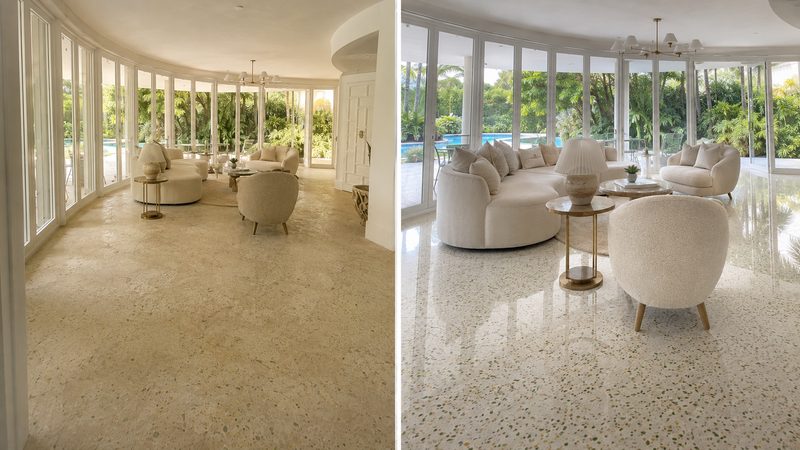
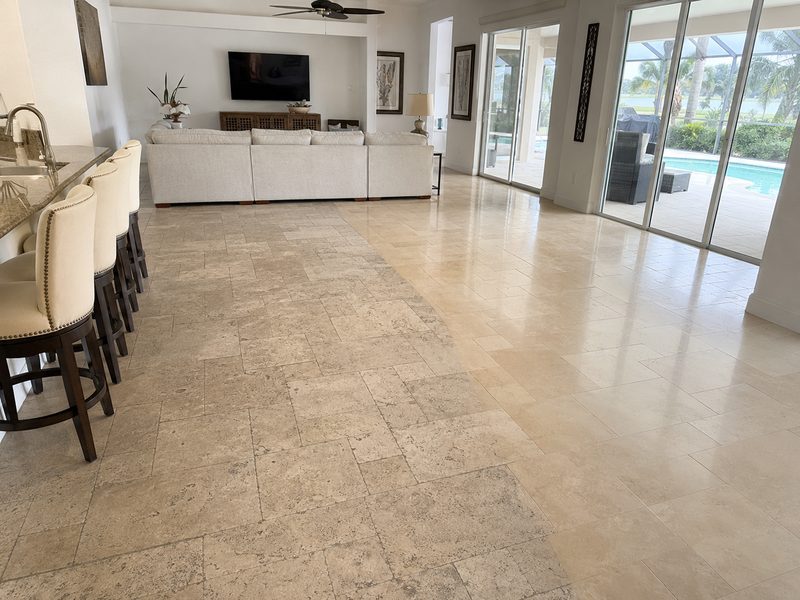
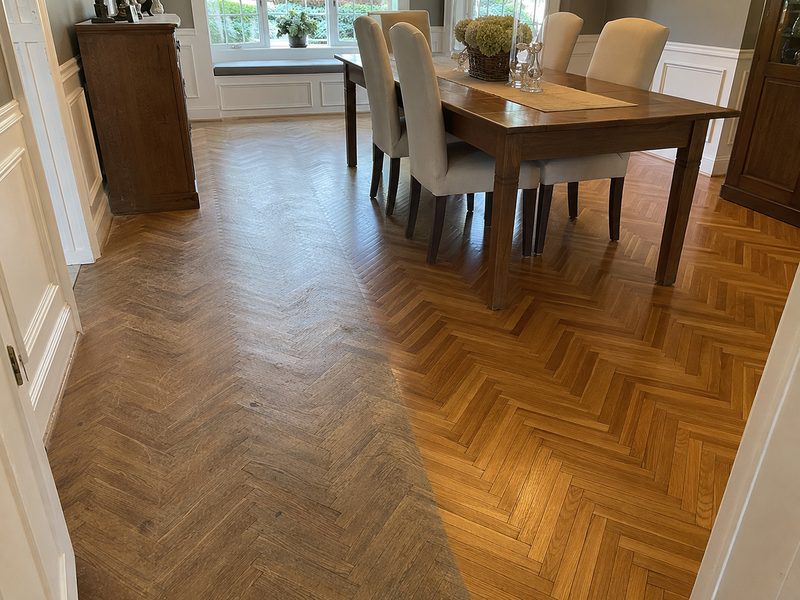
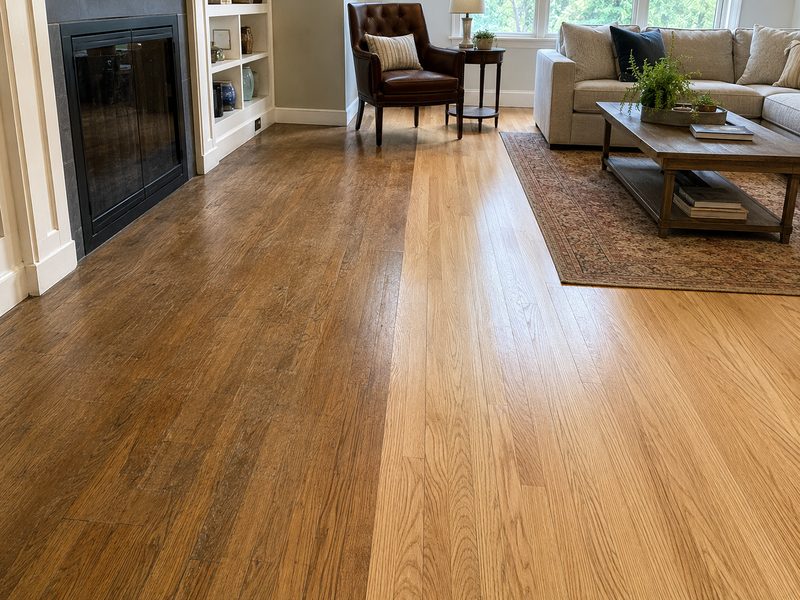
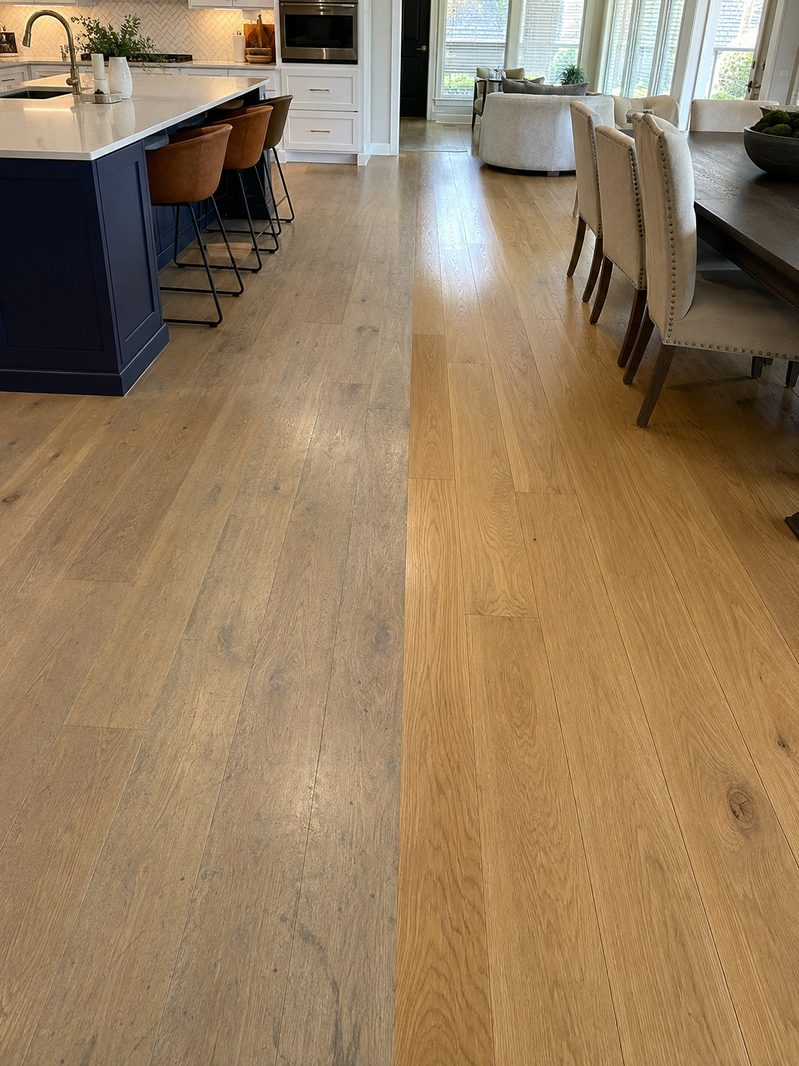
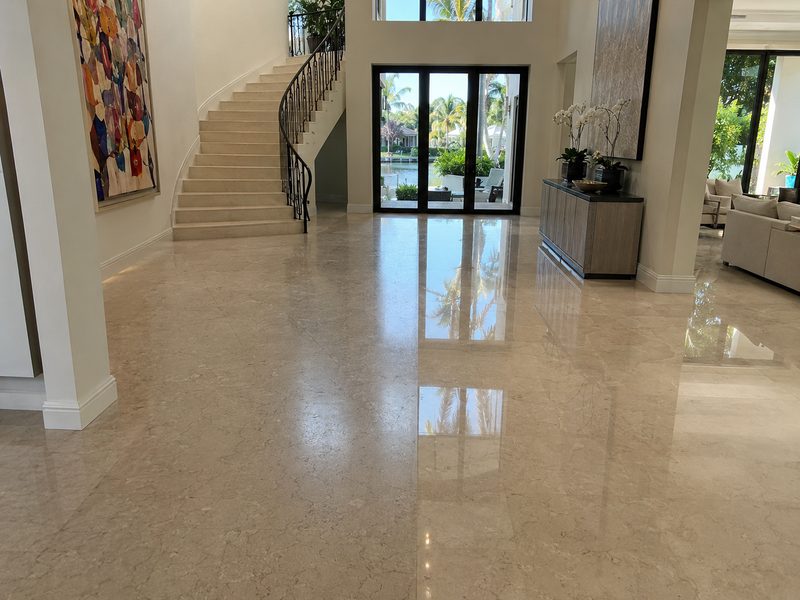
Illustrative examples of materials and sheen levels, not photographs of completed customer jobs.
Finish & Sheen Options
The sheen level changes both how the floor looks and how much upkeep it asks for.
Honed
Even and low-glare. Often specified in schools and healthcare where reflection is a safety consideration.
Satin
Moderate lustre that shows the aggregate clearly without mirror reflection.
Polished
Full reflective finish. The look most people picture when they think of restored mid-century terrazzo.
Residential & Commercial
Residential
- Mid-century home entryways
- Florida and Southwest slab-on-grade living areas
- Sunrooms and patios
- Historic home restoration
Commercial
- School and university corridors
- Hospital and clinic floors
- Airport terminals
- Government and civic buildings
- Hotel lobbies
What Affects the Cost
Every floor is priced after we have seen it. These are the variables that move the number.
Coating build-up
Terrazzo buried under decades of wax needs a full strip before grinding starts, and that stage alone can rival the polishing in labour.
Repair volume
Cracks, missing chips and failed patches are priced per area, and matching aggregate on older floors takes time to get right.
Matrix type
Epoxy and cement terrazzo need different tooling and consumables, and epoxy generally works faster.
Divider strip condition
Tarnished or lifted strips need cleaning or resetting, which is detail work across the full length of every strip.
Occupied building constraints
Schools and hospitals usually mean night and weekend work in phased sections.
Request a Terrazzo polishing estimate
Send the material, approximate area and a few photos, and we will take it from there.
Get a Free EstimateWhere We Offer Terrazzo Floor Polishing
Select a state to see the counties and cities currently covered.
Why Work With Us
Written estimate after inspection
We price the floor after seeing it, not from a phone description. The estimate sets out scope and the variables that could change it, so there are no discoveries mid-job.
Material identified before work starts
Marble, limestone and travertine look alike and behave differently under the same abrasive. We confirm what the floor actually is and test in a discreet area before committing to a method.
Dust controlled at source
Grinding and sanding run with HEPA-filtered extraction at the tool head and containment between work and occupied areas, because concrete dust is a health matter rather than a tidiness one.
Written maintenance plan on handover
You get the products, dilutions and intervals that keep the finish alive, since most floors we are called back to were damaged by cleaning rather than by use.
Frequently Asked Questions
Almost certainly not. Yellowing is nearly always accumulated acrylic wax rather than damage to the terrazzo itself, and stripping it typically reveals sound material underneath. Terrazzo is extremely durable and floors from the 1950s and 60s regularly restore well.
In most cases yes, and it is usually the cheaper route. Replacement makes sense only where the substrate has failed or where cracking is structural rather than cosmetic.
Good patches blend closely but rarely vanish entirely, particularly on older floors where the original aggregate is no longer produced. We match as closely as available material allows and are straightforward about the result beforehand.
Cement-based terrazzo benefits clearly from a penetrating sealer because the matrix is porous. Epoxy terrazzo is far less absorbent and the need is lower.