Marble Floor Polishing
Marble floor polishing refines calcium-based stone with diamond abrasives and polishing powders until the stone itself reflects light, removing etching and scratches rather than covering them with a coating.
- Free estimate, no obligation
- Priced after we see the floor — not over the phone
- Residential and commercial
- Marble
- Limestone
- Onyx
Get a Marble polishing Estimate
Three quick steps, about a minute. No obligation.
Floor Types & Materials
Reviewed July 2026.
Materials we work with
- Marble
- Limestone
- Onyx
- Calcite-based composite stone
Where this is used
- Entryways and foyers
- Bathrooms
- Kitchens
- Hotel lobbies
- Corporate receptions
Problems We Solve
Acid etching
Marble is calcium carbonate, so citrus, wine and many cleaners chemically dissolve the surface and leave dull marks. Only re-polishing the stone removes them; no product wipes them away.
Scratches and scuffs
Grit underfoot cuts fine scratches that catch the light. Honing passes take the surface below the scratch depth.
Lost shine
Traffic gradually flattens the polished surface. Repolishing restores reflectivity without any topical film.
Lippage between tiles
Uneven tile edges catch feet and mops. Flattening passes bring the floor to one plane, though this is a heavier operation than polishing alone.
Staining
Unsealed marble absorbs oil and dye. Poulticing draws the stain out before polishing, since polishing over a stain simply makes it shiny.
How It Works
-
Stone identification and testing
Marble, limestone and travertine behave differently under the same abrasive, so we confirm the material and test in a discreet area before committing.
-
Deep clean
Existing coatings, waxes and soil come off. Polishing over a topical sealer just polishes the sealer.
-
Honing
Progressive diamond grits remove etch marks and scratches. This is the stage that actually repairs the damage.
-
Polishing
Fine abrasives and polishing compound bring up reflectivity from the stone itself.
-
Impregnating sealer
A penetrating sealer slows absorption of oil and dye. It does not prevent etching — nothing topical does, because etching is chemical damage to the stone.
Typical timeline: 1–3 days for most residential floors
A foyer or bathroom is often a single day. Large lobbies, lippage correction and stain poulticing extend that, and sealer needs its cure window before the floor is washed.
Looking after the floor afterwards
Neutral cleaner only
Vinegar, citrus and most bathroom cleaners etch marble on contact. A stone-safe neutral cleaner is the single most important habit.
Blot spills immediately
Wine, coffee and juice both stain and etch. Blotting rather than wiping keeps the spill from spreading.
Mats at entries
Tracked grit is what scratches polished stone. Matting at exterior doors extends the interval between polishings substantially.
Re-seal periodically
Impregnating sealer wears out. Reapplication maintains stain resistance, though it never prevents etching.
Before & After: How These Finishes Look
What marble polishing looks like across different materials and sheen levels.
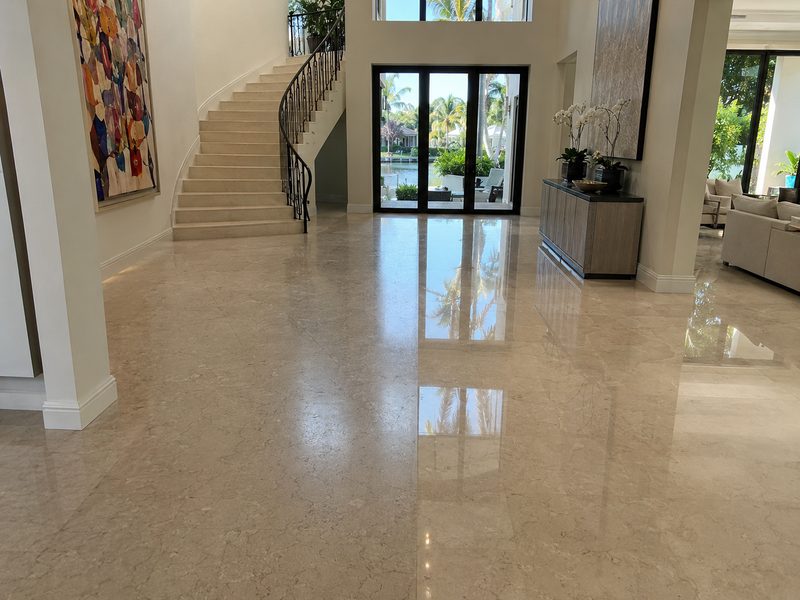
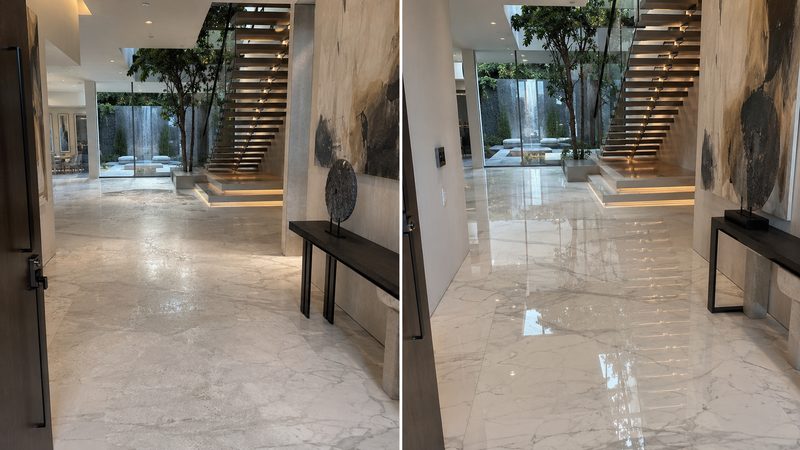
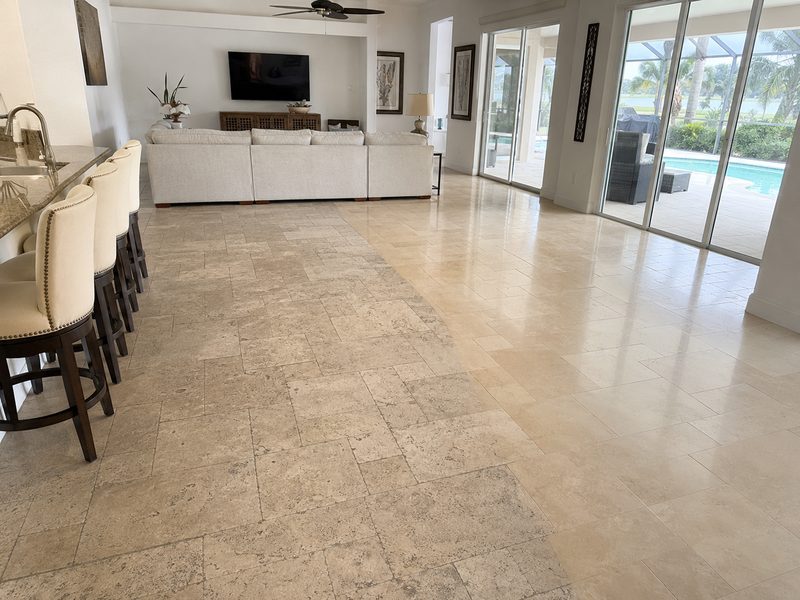
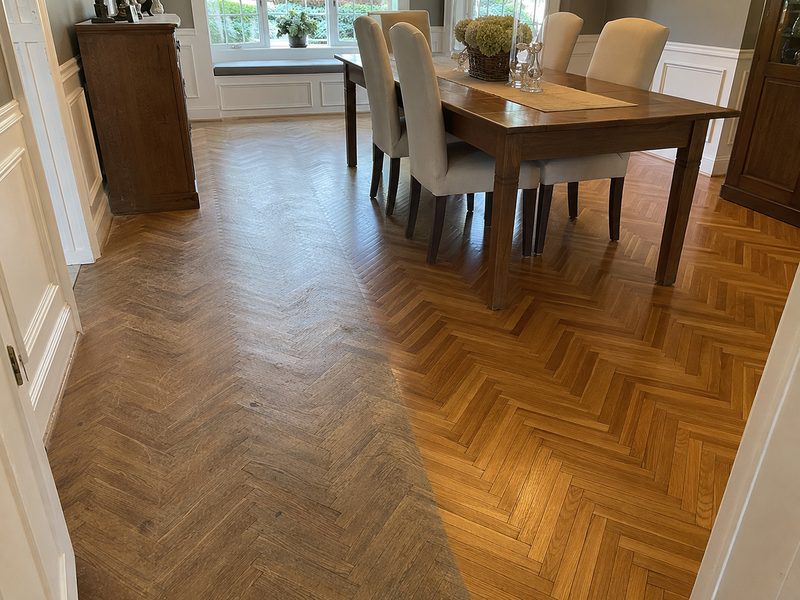
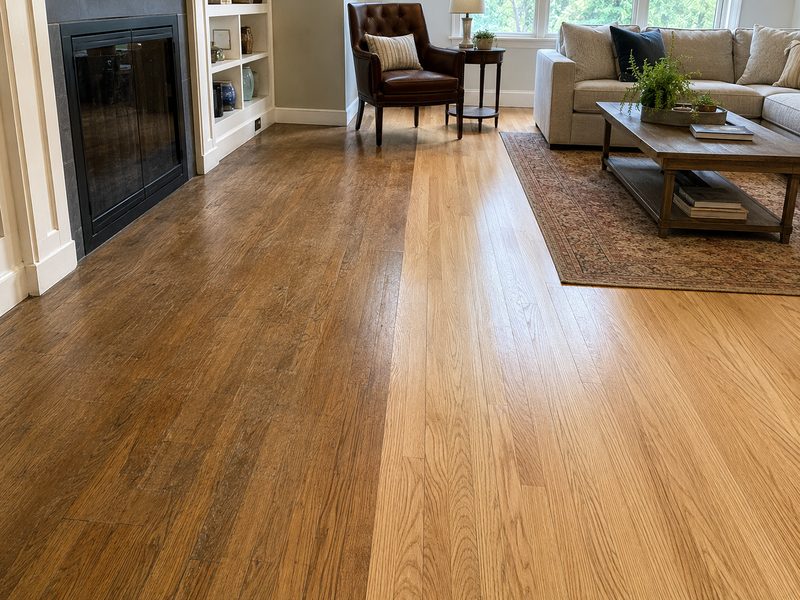
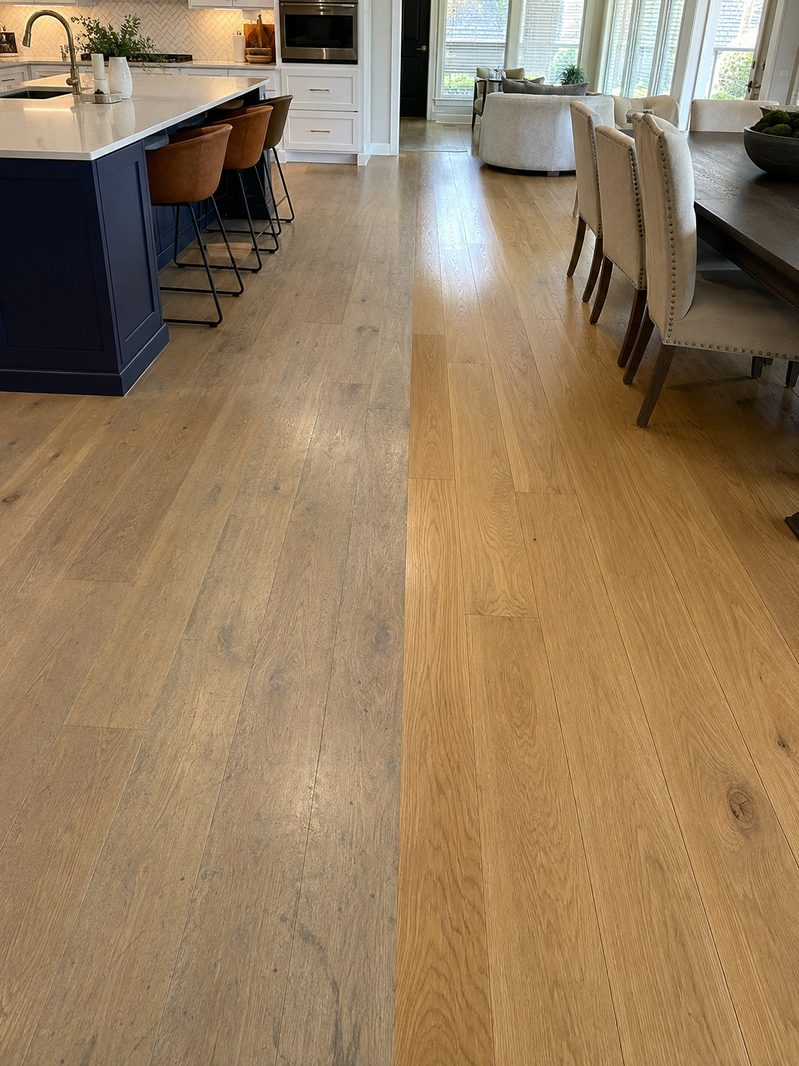
Illustrative examples of materials and sheen levels, not photographs of completed customer jobs.
Finish & Sheen Options
The sheen level changes both how the floor looks and how much upkeep it asks for.
Honed
Even, non-reflective surface. Shows etching far less than a polish, which makes it a practical choice for kitchens and busy bathrooms.
Semi-polished
Moderate reflection, a middle ground between hiding wear and showing the stone's depth.
Polished
Full reflective finish that brings out veining and colour. The classic marble look, and the one that shows every subsequent etch.
Residential & Commercial
Residential
- Entry foyers
- Master bathrooms
- Kitchen floors
- Staircases and landings
- Fireplace surrounds
Commercial
- Hotel lobbies
- Corporate reception areas
- Retail flagship floors
- Banks and civic buildings
- Restaurant entrances
What Affects the Cost
Every floor is priced after we have seen it. These are the variables that move the number.
Damage depth
Light etching polishes out quickly. Deep scratches and heavy traffic damage require starting at a coarser grit, which means more passes across the entire floor for consistency.
Stone type
Softer limestone and onyx need gentler, slower work than dense marble, and the risk of overcutting is higher.
Lippage correction
Flattening uneven tile edges is a separate, far more aggressive operation than polishing and is priced accordingly.
Stain removal
Poultice treatments are per-stain, sometimes repeated, and results depend on what caused the stain and how long it sat.
Area layout
Bathrooms and stairs carry a high proportion of edge and hand work relative to their square footage.
Request a Marble polishing estimate
Send the material, approximate area and a few photos, and we will take it from there.
Get a Free EstimateWhere We Offer Marble Floor Polishing
Select a state to see the counties and cities currently covered.
Why Work With Us
Written estimate after inspection
We price the floor after seeing it, not from a phone description. The estimate sets out scope and the variables that could change it, so there are no discoveries mid-job.
Material identified before work starts
Marble, limestone and travertine look alike and behave differently under the same abrasive. We confirm what the floor actually is and test in a discreet area before committing to a method.
Dust controlled at source
Grinding and sanding run with HEPA-filtered extraction at the tool head and containment between work and occupied areas, because concrete dust is a health matter rather than a tidiness one.
Written maintenance plan on handover
You get the products, dilutions and intervals that keep the finish alive, since most floors we are called back to were damaged by cleaning rather than by use.
Frequently Asked Questions
Those are etch marks — the acid in a spill or cleaner has dissolved a shallow layer of the stone. No cleaning product removes them because there is nothing sitting on the surface; the surface itself has changed. Re-polishing the affected area is the only fix.
No, and this is the most common misunderstanding about marble. Impregnating sealer slows liquid absorption to reduce staining, but acid still reaches and reacts with the calcium carbonate. Honed finishes hide etching better than polished ones.
Honed, in most cases. A kitchen floor sees acidic spills regularly, and etch marks are far less visible on a matte surface than a mirror one.
No. Cracked or hollow tiles need replacement or repair first. Polishing refines the surface and cannot address structural damage.