Tile Floor Restoration
Tile floor restoration recovers ceramic, porcelain and quarry tile floors by deep-cleaning the tile, repairing or replacing failed grout, and sealing the joints where soiling actually lives.
- Free estimate, no obligation
- Priced after we see the floor — not over the phone
- Residential and commercial
- Ceramic tile
- Porcelain tile
- Quarry tile
Get a Tile and grout restoration Estimate
Three quick steps, about a minute. No obligation.
Floor Types & Materials
Reviewed July 2026.
Materials we work with
- Ceramic tile
- Porcelain tile
- Quarry tile
- Saltillo and terracotta
- Cement tile
Where this is used
- Kitchens and bathrooms
- Entryways and hallways
- Commercial kitchens
- Restrooms
- Food service areas
Problems We Solve
Dark, soiled grout
Grout is porous and sits below tile level, so it collects everything. Deep extraction cleaning reaches what mopping only redistributes.
Cracked and missing grout
Failed joints let water reach the substrate. Removing and replacing the grout is a repair, not a cosmetic step.
Mineral and soap build-up
Hard water and soap residue leave a haze that ordinary cleaning cannot cut. It needs the right chemistry for the tile type.
Slippery commercial kitchen floors
Grease films on quarry tile are a genuine safety issue. Degreasing restores the tile's intended slip characteristics.
Loose and hollow tiles
Tiles that have lost their bond sound hollow and eventually crack. They are re-set or replaced before any sealing work.
How It Works
-
Identify tile and glaze
Glazed porcelain, unglazed quarry and terracotta each tolerate different chemistry and pressure. Saltillo in particular is easy to damage with an aggressive approach.
-
Pre-treat and dwell
Cleaning agents suited to the soil type are applied and given time to break the bond before extraction.
-
Deep clean and extract
Contained high-pressure extraction lifts soil out of the grout joints and removes the wastewater rather than pushing it around.
-
Grout repair or replacement
Cracked and missing sections are cut out and re-grouted; where the whole floor's grout has failed, colour-sealing or full replacement is the honest recommendation.
-
Seal grout joints
Penetrating sealer, or a colour seal where the client wants uniform colour, protects the joints from re-soiling.
Typical timeline: 1–2 days for most residential floors
Cleaning and sealing a typical kitchen or bathroom is often a single day. Grout replacement adds cure time before sealing, and sealer needs its own window before the floor gets wet.
Looking after the floor afterwards
Stop using acidic cleaners
Acid erodes cement grout and shortens sealer life. Neutral cleaner protects both.
Rinse after cleaning
Detergent residue left on tile attracts soil and is a common reason floors look dirty again quickly.
Reseal grout periodically
Sealer wears out in traffic. Water no longer beading in the joints is the signal.
Address cracks early
A cracked joint lets water reach the substrate, and that turns a grout repair into a tile replacement.
Before & After: How These Finishes Look
What tile and grout restoration looks like across different materials and sheen levels.
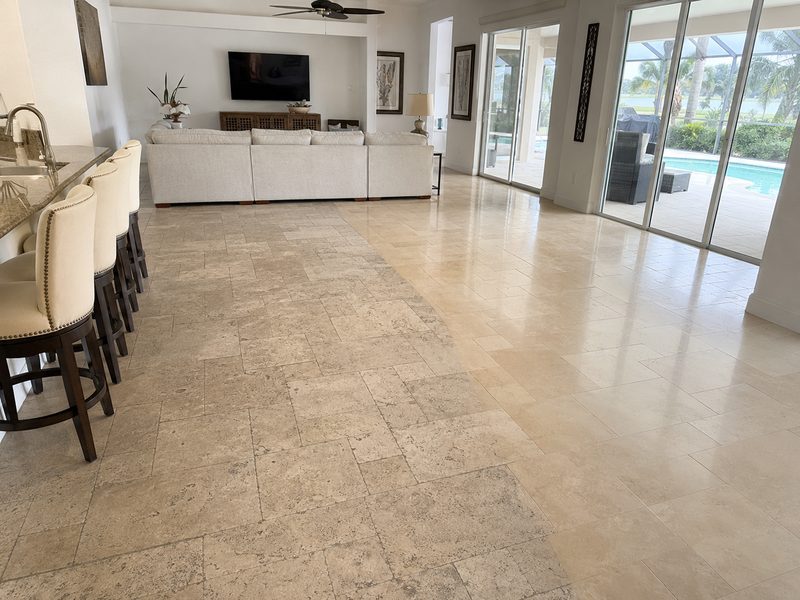
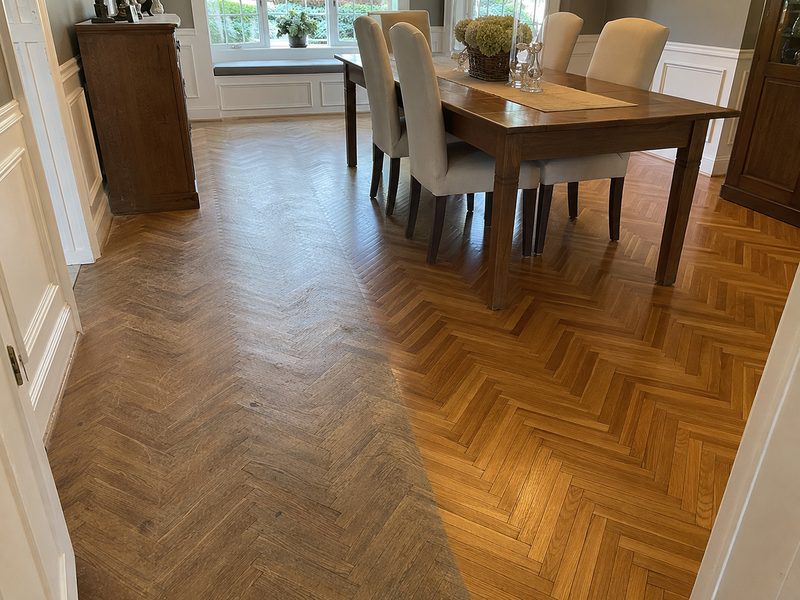
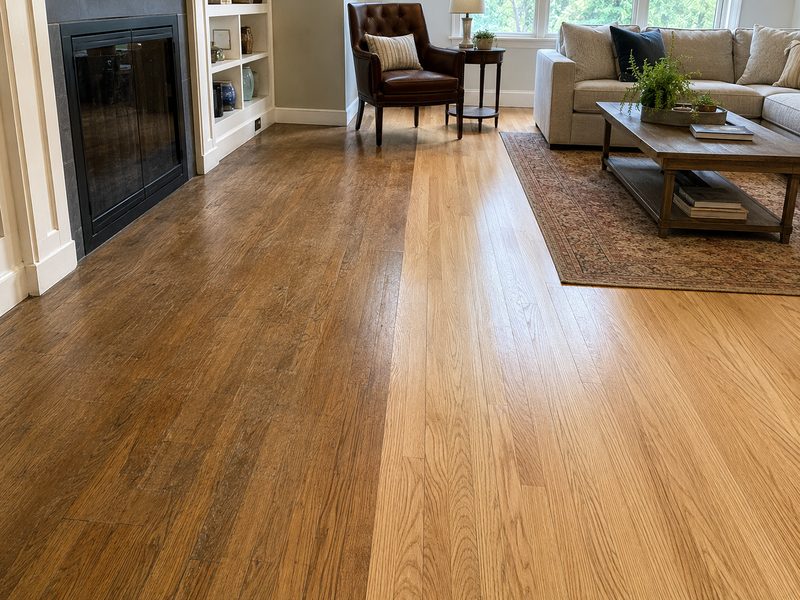
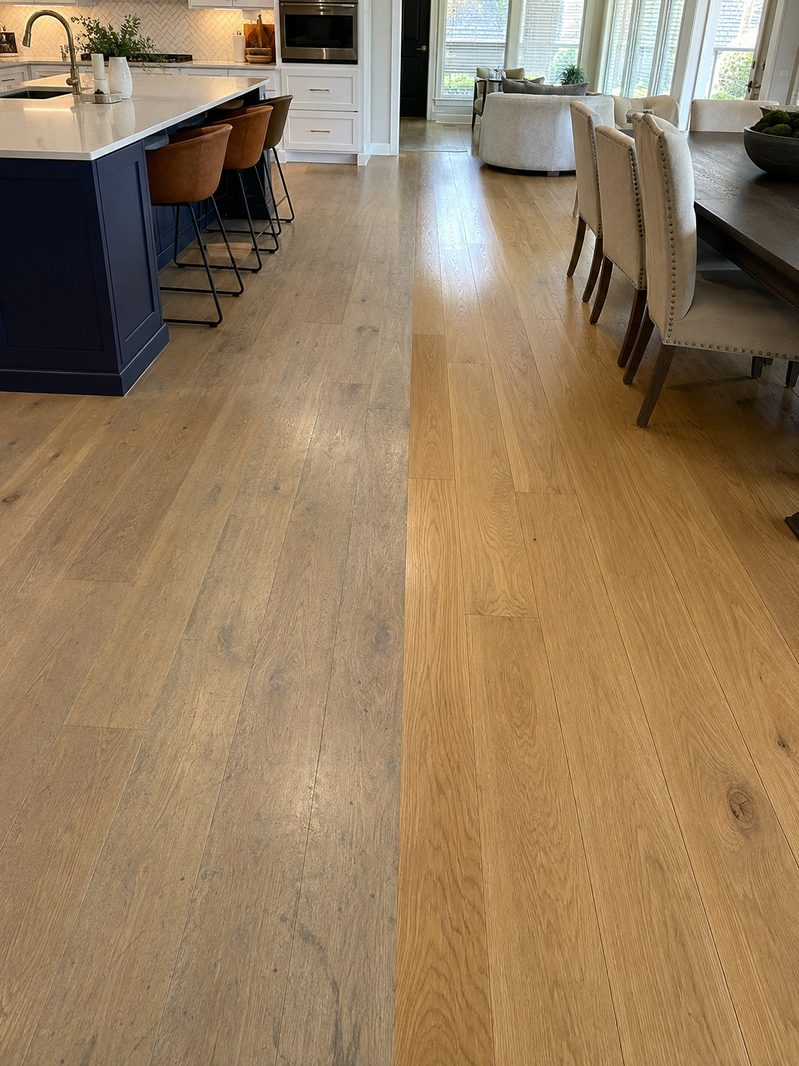
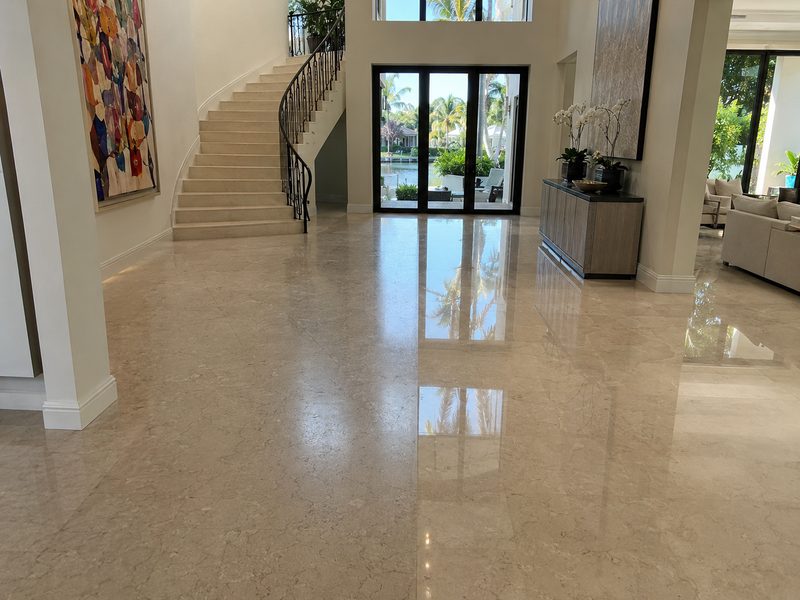
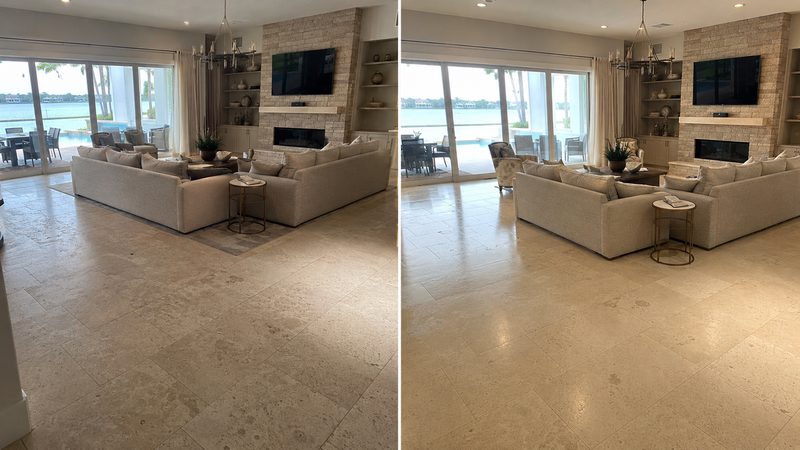
Illustrative examples of materials and sheen levels, not photographs of completed customer jobs.
Finish & Sheen Options
The sheen level changes both how the floor looks and how much upkeep it asks for.
Clean and sealed
The tile's own finish, with grout deep-cleaned and sealed. The standard outcome for most floors.
Colour-sealed grout
A pigmented seal that makes patchy or permanently stained grout a single consistent colour, and resists re-soiling well.
Enhanced
A colour-enhancing sealer for unglazed terracotta and quarry tile, deepening the natural tone.
Residential & Commercial
Residential
- Kitchen and bathroom floors
- Entry and hallway tile
- Laundry rooms
- Terracotta and Saltillo floors
- Shower and wet-room floors
Commercial
- Commercial kitchen quarry tile
- Restrooms
- Restaurant dining floors
- Retail entrances
- Food processing areas
What Affects the Cost
Every floor is priced after we have seen it. These are the variables that move the number.
Grout condition
Cleaning is one price; cutting out and replacing failed grout is a different order of work entirely, and it is the item that most often changes a quote after inspection.
Colour sealing
Colour seal is applied joint by joint. On a floor with many small tiles that is a large amount of linear footage.
Soil type
Household soil extracts readily. Grease in a commercial kitchen, or years of build-up, needs stronger treatment and repeat passes.
Tile type
Unglazed and porous tile such as Saltillo needs slower, gentler methods than glazed porcelain.
Tile size
Small mosaic tile carries far more grout per square foot than large-format tile, and grout is where the work is.
Request a Tile and grout restoration estimate
Send the material, approximate area and a few photos, and we will take it from there.
Get a Free EstimateWhere We Offer Tile Floor Restoration
Select a state to see the counties and cities currently covered.
Why Work With Us
Written estimate after inspection
We price the floor after seeing it, not from a phone description. The estimate sets out scope and the variables that could change it, so there are no discoveries mid-job.
Material identified before work starts
Marble, limestone and travertine look alike and behave differently under the same abrasive. We confirm what the floor actually is and test in a discreet area before committing to a method.
Dust controlled at source
Grinding and sanding run with HEPA-filtered extraction at the tool head and containment between work and occupied areas, because concrete dust is a health matter rather than a tidiness one.
Written maintenance plan on handover
You get the products, dilutions and intervals that keep the finish alive, since most floors we are called back to were damaged by cleaning rather than by use.
Frequently Asked Questions
Usually because the grout is unsealed and porous, so soil sits inside the joint rather than on it. Surface mopping cannot reach that, and it can even push soil deeper. Extraction cleaning followed by sealing is what actually changes the outcome.
It is, where grout is permanently stained or has cured patchy. It gives a uniform colour and forms a barrier against re-soiling. On sound, evenly coloured grout a penetrating sealer is usually enough.
Individual cracked tiles can be replaced if matching stock exists, which is the sticking point on older floors. Widespread cracking normally points to substrate movement, and that has to be addressed before any surface work is worthwhile.
Foot traffic usually returns the same day once the floor is dry. Sealer cure takes longer, and the floor should stay dry through that window for the seal to perform.