Hardwood Floor Polishing
Hardwood floor polishing restores sheen and clarity to a wood floor whose finish layer is dull but intact, using buffing and recoating rather than sanding back to bare timber.
- Free estimate, no obligation
- Priced after we see the floor — not over the phone
- Residential and commercial
- Solid hardwood
- Engineered hardwood
- Prefinished boards with intact wear layer
Get a Hardwood polishing Estimate
Three quick steps, about a minute. No obligation.
Floor Types & Materials
Reviewed July 2026.
Materials we work with
- Solid hardwood
- Engineered hardwood
- Prefinished boards with intact wear layer
- Parquet
Where this is used
- Living and dining rooms
- Bedrooms
- Hallways and stairs
- Offices
- Boutique retail
Problems We Solve
Dull, cloudy finish
Micro-scratching and cleaner residue scatter light and flatten the look of the wood. Buffing and a fresh coat restore clarity without touching the timber.
Traffic lanes
Walkways wear faster than the rest of the room, leaving visible paths. A recoat evens the surface back out before the wear reaches bare wood.
Surface scratches
Pet claws and grit leave scratches in the finish, not the wood. Those abrade out during buffing and disappear under the new coat.
Residue build-up
Acrylic polishes and oil soaps leave a film that yellows and blocks any new coating from bonding. It has to be chemically stripped before recoating.
How It Works
-
Finish assessment
The decisive question is whether the wear layer is intact. Where the finish is worn through to bare wood, recoating cannot help and sanding is the correct route.
-
Deep clean and residue strip
Old polish and cleaner residue come off completely, because a new coat over residue will peel in months.
-
Abrasion buff
A screen or pad scuffs the existing finish so the new coat has mechanical grip, and takes surface scratches out at the same time.
-
Dust removal
Vacuum plus tack pass. Any dust left behind is permanently sealed into the new finish.
-
Recoat
One or two coats of compatible finish, each cured and lightly abraded between passes.
Typical timeline: 1–2 days plus cure time
Buffing and one coat usually fit into a single day. Foot traffic returns after the finish sets, but rugs and heavy furniture wait considerably longer while the coating reaches full hardness — rushing that step is what causes most callbacks.
Looking after the floor afterwards
Wait before replacing rugs
A finish accepts foot traffic long before it fully cures. Rugs laid too early trap solvent and can leave permanent marks.
Felt pads under everything
Chair and table feet cause most new scratches. Felt pads, checked periodically for embedded grit, prevent them.
No wet mopping
Standing water works into board seams and lifts edges. Damp microfibre and a wood-specific cleaner are enough.
Skip the polish products
Consumer polish sprays build the exact residue that has to be stripped before the next recoat.
Before & After: How These Finishes Look
What hardwood polishing looks like across different materials and sheen levels.
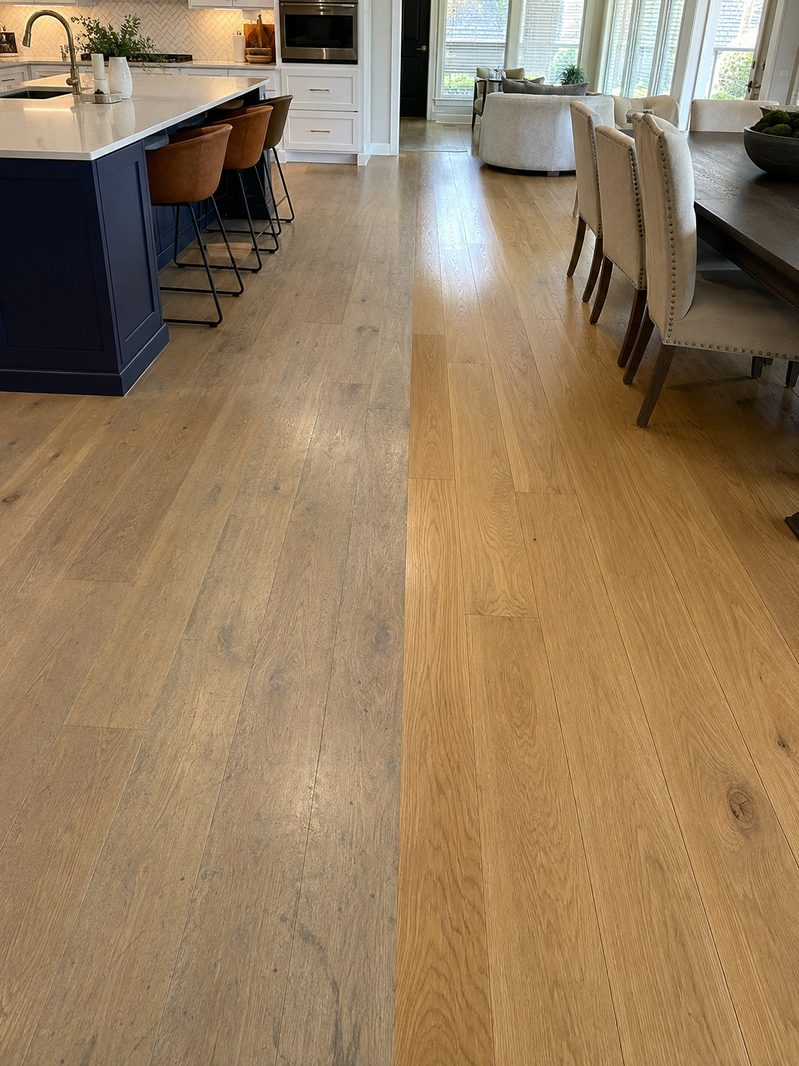
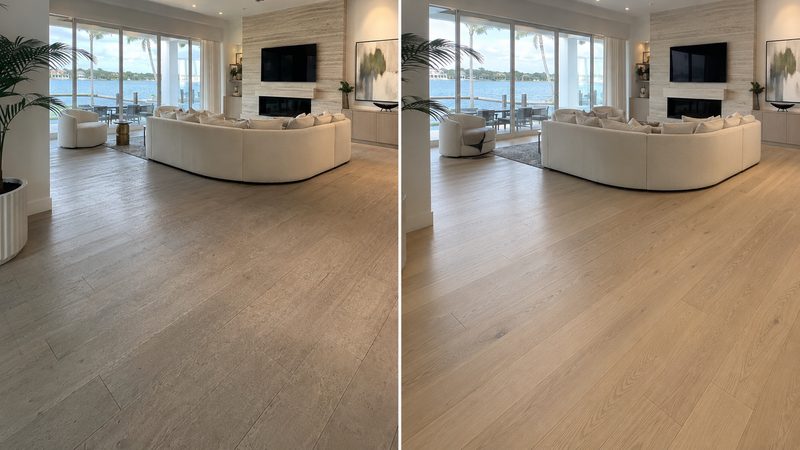
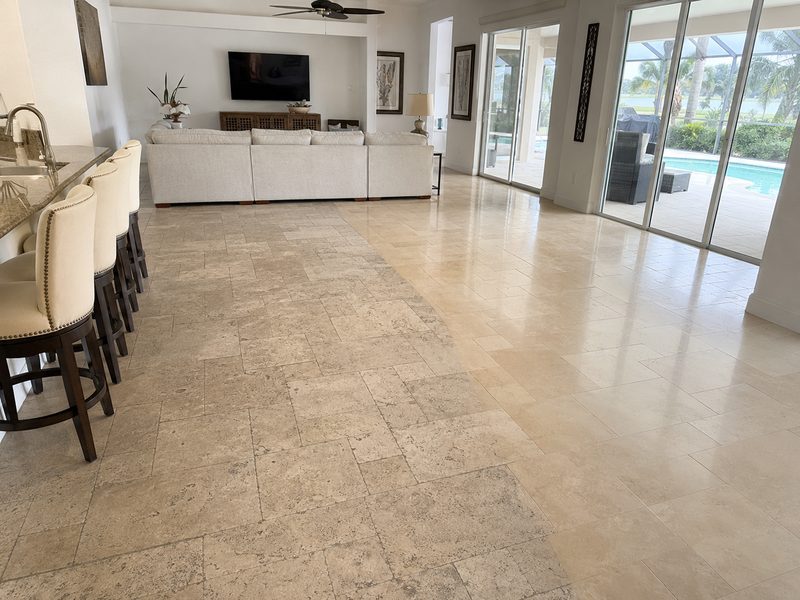
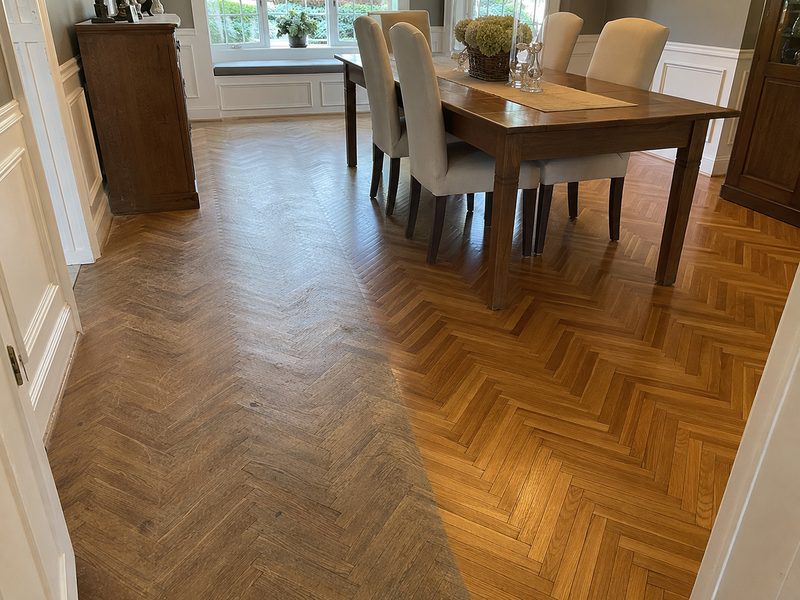
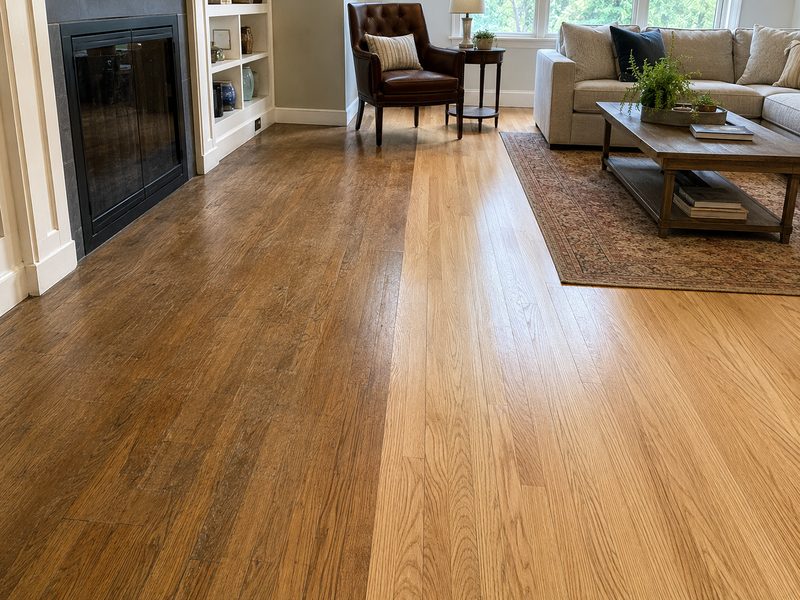
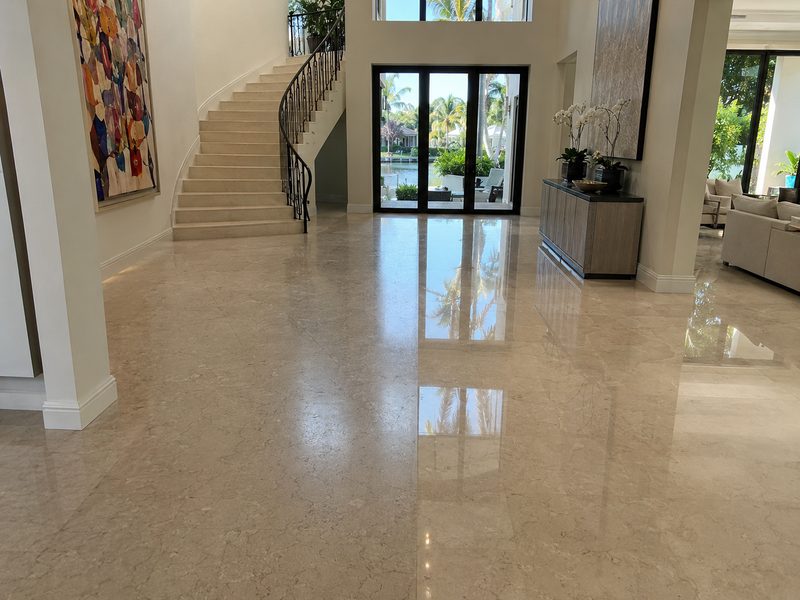
Illustrative examples of materials and sheen levels, not photographs of completed customer jobs.
Finish & Sheen Options
The sheen level changes both how the floor looks and how much upkeep it asks for.
Matte
Almost no reflection. Hides dust, scratches and pet traffic better than any other sheen.
Satin
The most common residential choice — enough lustre to look finished, forgiving about everyday wear.
Semi-gloss
Noticeably reflective, emphasises grain, and shows dust and scratches more readily.
Gloss
Strong reflection, formal look, and the least forgiving surface for a busy household.
Residential & Commercial
Residential
- Whole-floor refresh before a sale or move
- Living areas that have gone dull
- Stairs and landings
- Bedrooms with light wear
Commercial
- Boutique retail floors
- Restaurant dining rooms
- Office reception areas
- Function and event spaces
What Affects the Cost
Every floor is priced after we have seen it. These are the variables that move the number.
Existing finish type
Waxed and oil-finished floors need different treatment from polyurethane, and identifying the wrong one leads to adhesion failure. Compatibility testing is part of the quote.
Residue load
Floors treated for years with acrylic polish need a full strip before anything else, which adds a labour stage the client often did not expect.
Number of coats
A single maintenance coat differs substantially from two coats with abrasion between them.
Room complexity
Built-in furniture, stair spindles and tight closets shift work from machine to hand.
Furniture handling
Whether the space is cleared before we arrive or the crew moves and protects contents changes the labour line.
Request a Hardwood polishing estimate
Send the material, approximate area and a few photos, and we will take it from there.
Get a Free EstimateWhere We Offer Hardwood Floor Polishing
Select a state to see the counties and cities currently covered.
Why Work With Us
Written estimate after inspection
We price the floor after seeing it, not from a phone description. The estimate sets out scope and the variables that could change it, so there are no discoveries mid-job.
Material identified before work starts
Marble, limestone and travertine look alike and behave differently under the same abrasive. We confirm what the floor actually is and test in a discreet area before committing to a method.
Dust controlled at source
Grinding and sanding run with HEPA-filtered extraction at the tool head and containment between work and occupied areas, because concrete dust is a health matter rather than a tidiness one.
Written maintenance plan on handover
You get the products, dilutions and intervals that keep the finish alive, since most floors we are called back to were damaged by cleaning rather than by use.
Frequently Asked Questions
The test is whether the finish is worn through. If bare wood is exposed, if boards are grey or water-stained, or if scratches have reached the timber, recoating will seal the damage in rather than fix it and sanding is the honest answer.
Repeatedly — that is the advantage. A floor kept on a recoat cycle may never need a full sanding, whereas one left until the wear layer fails has to be sanded and loses thickness each time.
Only those confined to the finish layer. A scratch you can catch a fingernail in has usually reached the wood and will still be visible, though far less obvious under a fresh coat.
Not without complete wax removal, and even then results vary. Polyurethane will not bond over wax residue, so waxed floors are usually maintained with wax or sanded back to bare wood first.