Floor Cleaning, Sealing & Maintenance
Floor cleaning, sealing and maintenance is the scheduled programme that keeps a restored floor performing — deep cleaning, resealing and periodic burnishing — so the surface never degrades to the point of needing full refinishing again.
- Free estimate, no obligation
- Priced after we see the floor — not over the phone
- Residential and commercial
- Polished concrete
- Natural stone
- Terrazzo
Get a Cleaning, sealing and maintenance Estimate
Three quick steps, about a minute. No obligation.
Floor Types & Materials
Reviewed July 2026.
Materials we work with
- Polished concrete
- Natural stone
- Terrazzo
- Tile and grout
- Hardwood
Where this is used
- Homes
- Offices
- Retail
- Restaurants
- Schools
- Healthcare
Problems We Solve
Sealer worn out
Sealer is consumable and fails silently. Once water stops beading, the floor is absorbing everything that lands on it.
Cleaner residue build-up
Over-concentrated detergent leaves a dulling film that attracts more soil — a floor that looks dirty immediately after cleaning usually has this problem.
Sheen lost to traffic
Micro-abrasion flattens a polished surface over time. Burnishing restores reflectivity without repeating the grinding sequence.
Wrong products in use
Acidic cleaners on stone and grout, or acrylic polish on terrazzo, cause damage that costs far more to reverse than the cleaning ever saved.
Uneven maintenance
Where cleaning crews rotate, technique and dilution drift. A written regime and periodic professional service hold the standard.
How It Works
-
Condition audit
We test water absorption, check sheen against the original specification and identify what products have been in use — the last one explains most problems we find.
-
Deep clean
Extraction cleaning suited to the surface removes embedded soil and residue that routine mopping leaves behind.
-
Spot repair
Minor etching, scratching and grout defects are addressed before sealing so they are not locked under the new seal.
-
Reseal
Penetrating sealer matched to the material and its traffic level, applied at the correct rate.
-
Burnish
High-speed burnishing brings back sheen on polished concrete, terrazzo and stone.
-
Written maintenance plan
Products, dilutions, frequencies and the next service date, handed over in writing so whoever cleans the floor next has the same instructions.
Typical timeline: Half a day to 2 days per visit
A routine maintenance visit on a well-kept floor is short. Neglected floors need remedial work first, and sealer requires a cure window before the floor is washed or takes heavy traffic.
Looking after the floor afterwards
Follow the written regime
The plan specifies product, dilution and frequency. Departures from it are what bring floors back into remedial work.
Test the seal periodically
Water beading on the surface means the sealer is working. Water darkening the surface means it is time to reseal.
Maintain entry matting
Saturated mats stop trapping grit. Cleaning and replacing them is part of floor maintenance, not separate from it.
Book before failure
Scheduled service is a fraction of the cost of restoration, and the whole point of the programme is never to need the latter.
Before & After: How These Finishes Look
What cleaning, sealing and maintenance looks like across different materials and sheen levels.



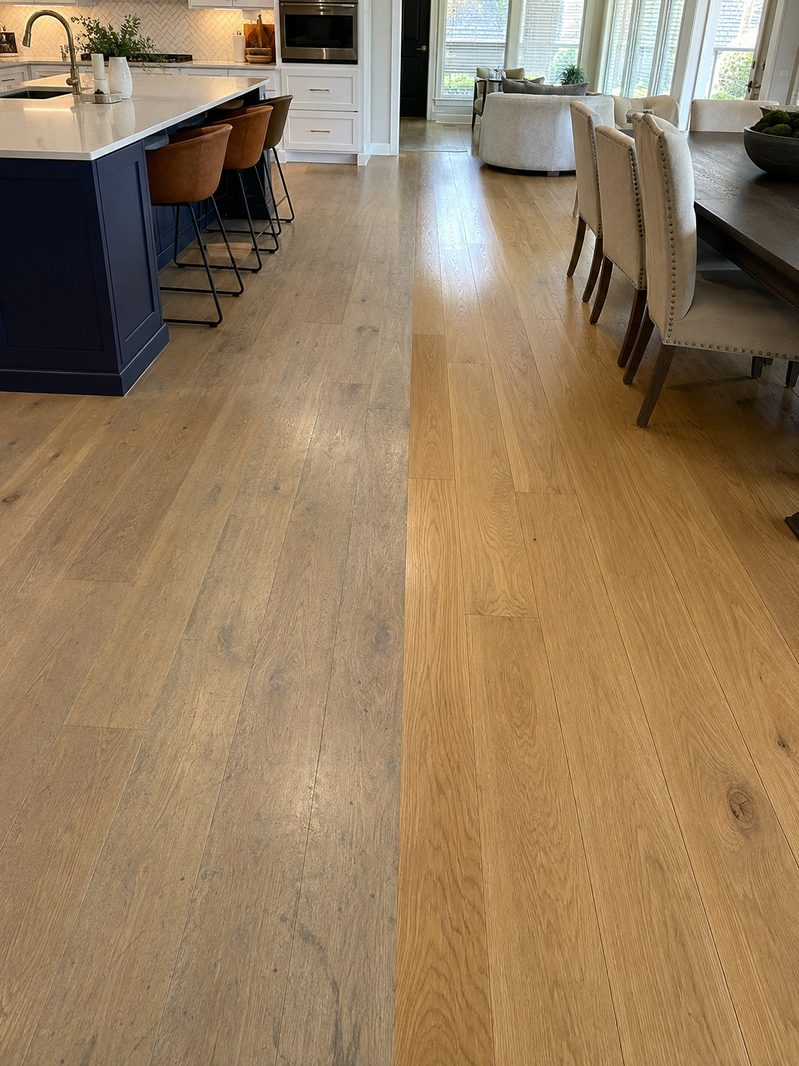
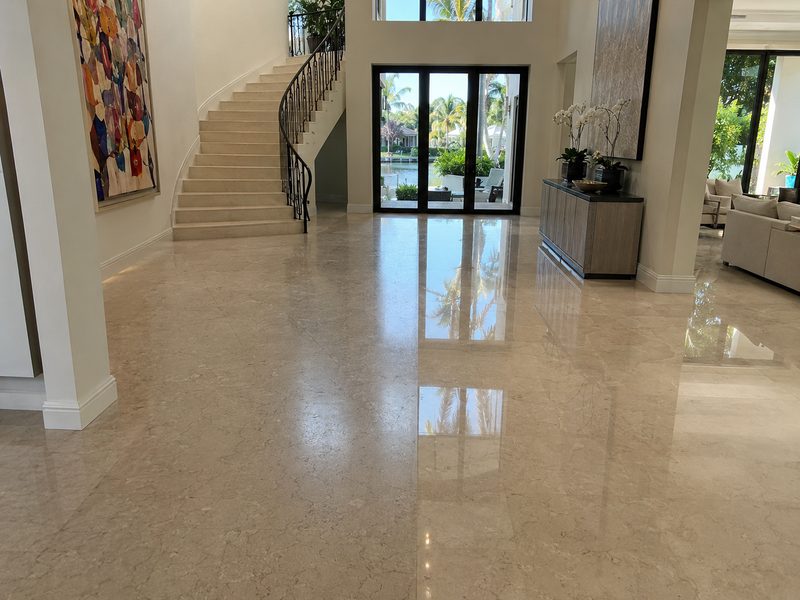
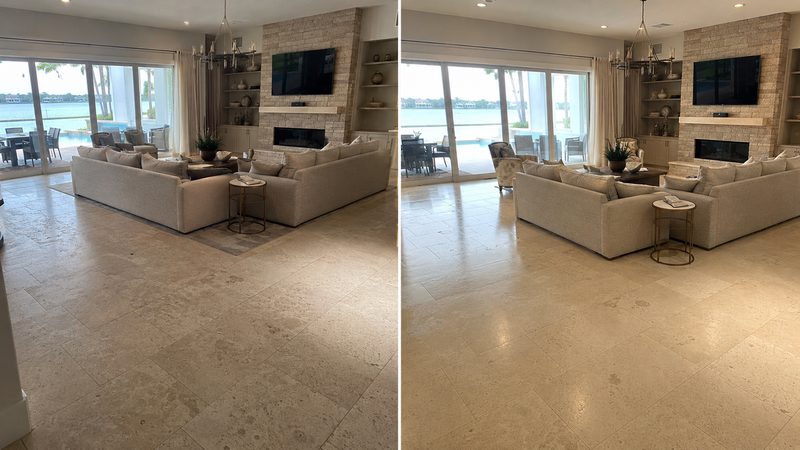
Illustrative examples of materials and sheen levels, not photographs of completed customer jobs.
Finish & Sheen Options
The sheen level changes both how the floor looks and how much upkeep it asks for.
Restored sheen
Burnished back to the finish level the floor was completed at, without altering the surface refinement.
Sealed matte
Protection with no change in appearance — the usual outcome on stone and tile.
Colour-enhanced
An enhancing sealer that deepens natural tone on stone and unglazed tile.
Residential & Commercial
Residential
- Annual stone and tile maintenance
- Polished concrete resealing
- Post-renovation deep clean
- Pre-sale floor refresh
Commercial
- Scheduled retail floor programmes
- Restaurant kitchen and dining maintenance
- Office common areas
- School and healthcare cleaning contracts
What Affects the Cost
Every floor is priced after we have seen it. These are the variables that move the number.
Time since last service
Floors maintained on schedule need light work. Floors left until visibly failed may need restoration rather than maintenance, and the price difference between those two is large.
Surface type
Sealer choice and application rate differ by material and porosity, and porous surfaces simply consume more product.
Service frequency
Scheduled recurring programmes are priced differently from one-off call-outs.
Damage found on audit
Etching, scratching and grout failure discovered during the audit are quoted separately from the maintenance itself.
Access hours
Out-of-hours service in occupied premises carries its own rate.
Request a Cleaning, sealing and maintenance estimate
Send the material, approximate area and a few photos, and we will take it from there.
Get a Free EstimateWhere We Offer Floor Cleaning, Sealing & Maintenance
Select a state to see the counties and cities currently covered.
Why Work With Us
Written estimate after inspection
We price the floor after seeing it, not from a phone description. The estimate sets out scope and the variables that could change it, so there are no discoveries mid-job.
Material identified before work starts
Marble, limestone and travertine look alike and behave differently under the same abrasive. We confirm what the floor actually is and test in a discreet area before committing to a method.
Dust controlled at source
Grinding and sanding run with HEPA-filtered extraction at the tool head and containment between work and occupied areas, because concrete dust is a health matter rather than a tidiness one.
Written maintenance plan on handover
You get the products, dilutions and intervals that keep the finish alive, since most floors we are called back to were damaged by cleaning rather than by use.
Frequently Asked Questions
It depends on traffic, material and the sealer used, so the reliable guide is the water test rather than the calendar: sprinkle water on the surface, and if it darkens the floor instead of beading, the sealer has worn through.
Yes, and they should — daily care is theirs. The written regime gives them the correct product, dilution and method. Periodic professional burnishing and resealing handles what routine cleaning cannot.
Almost always detergent residue from over-concentrated solution or insufficient rinsing. Correcting dilution and rinsing usually resolves it without any treatment to the floor itself.
For commercial floors, generally yes: scheduled service costs materially less than the restoration that neglect eventually forces, and it keeps appearance consistent rather than cycling between good and poor.