Industrial Floor Polishing in Plant City, FL
Industrial floor polishing refines heavy-duty warehouse and plant slabs to cut dust, survive forklift traffic and improve light levels, without the recoat cycle that coatings impose. In Plant City, FL, that work most often means grease and organic build-up on quarry tile across Historic Downtown and Walden Lake and the surrounding Hillsborough County area. Service available in Plant City and the eastern Hillsborough County area, including agricultural and food-handling facilities. Reviewed July 2026.
- Free estimate, no obligation
- Priced after we see the floor — not over the phone
- Residential and commercial
- Quarry tile
- Sealed and polished concrete
- Ceramic tile
Industrial floor polishing in Plant City
Three quick steps, about a minute. No obligation.
Floor Types We Work On in Plant City
Materials common in Plant City
- Quarry tile
- Sealed and polished concrete
- Ceramic tile
- Heart pine hardwood
- Terrazzo
Property types here
- Historic downtown commercial buildings
- Agricultural packing houses
- Rural and semi-rural homes
- Walden Lake residential
- Cold storage and warehousing
Floor Problems We See in Plant City
Grease and organic build-up on quarry tile
Packing house and commercial kitchen quarry tile accumulates a film that is genuinely a slip hazard, not just an appearance issue, and routine mopping does not cut it.
Sealer failure under wash-down
Sealers specified for domestic traffic fail quickly on floors washed several times a day, so material selection here is driven by cleaning regime rather than by foot traffic.
Historic downtown timber and terrazzo
Buildings around the downtown district hold original heart pine and terrazzo under later commercial floor coverings, often in better condition than the covering above them.
How Industrial Floor Polishing Works
-
Slab survey
Hardness, flatness, joint condition and existing coatings are assessed, along with how the floor is actually loaded — a racking aisle and an open bay are different problems.
-
Joint and crack repair
Semi-rigid joint filler and crack repair come first. Polishing over failing joints wastes the work, because the joints will keep breaking down.
-
Coating removal and flattening
Metal-bond passes remove old coatings and take out high spots across large areas.
-
Densification
Chemical hardener reacts through the surface, which matters more on industrial slabs than anywhere else given the wheel loads involved.
-
Refinement to specified sheen
Resin passes to the agreed level, usually stopping lower than commercial work because gloss is not the objective.
-
Sealing and line marking
Penetrating protection, then safety lines and traffic markings reinstated to the site's layout.
Typical timeline: Phased over 1–3 weeks for large facilities
Scale and phasing dominate. Joint repair needs cure time before polishing, and work is normally sequenced bay by bay so operations continue, which stretches calendar time well beyond machine hours.
Looking after the floor afterwards
Autoscrubber with neutral cleaner
Correct pad grade and neutral detergent maintain the surface; aggressive pads and harsh chemistry undo it.
Inspect joints periodically
Joint filler is the wear item on an industrial floor. Catching a failing joint early prevents the spalling from spreading.
Clean spills promptly
Sealer buys recovery time on oil and coolant, but it is a window, not immunity.
Manage wheel condition
Damaged forklift wheels mark floors badly. Wheel maintenance protects the slab as much as any floor treatment.
Residential & Commercial Work in Plant City
Residential
- Heart pine refinishing in older Plant City homes
- Tile and grout restoration in Walden Lake
- Garage and workshop slab polishing
- Terrazzo restoration in mid-century houses
Commercial
- Packing house and food-handling floors
- Commercial kitchen quarry tile
- Historic downtown retail floors
- Cold storage and warehouse slabs
Plant City Service Area
Service available in Plant City and the eastern Hillsborough County area, including agricultural and food-handling facilities. Information on this page was last reviewed July 2026.
Neighborhoods we cover
- Historic Downtown
- Walden Lake
- Midway
- Springhead
ZIP codes served
- 33563
- 33565
- 33566
- 33567
Getting to you
Crews reach Plant City via I-4, US-92, State Road 39, working around Florida Strawberry Festival grounds and the surrounding area.
Local landmarks and reference points
- Florida Strawberry Festival grounds
- Plant City Union Depot
- Historic downtown district
How the Plant City climate affects floors
Inland agricultural humid subtropical, with the county's widest day-to-night temperature swing and heavy seasonal work traffic.
Agricultural soil and organic staining
Field soil tracked into packing houses and homes carries organic matter that stains porous floors differently from ordinary household soil, and it needs different chemistry to lift.
Wash-down cycles in food handling
Packing and processing floors are washed down constantly. Standing water and cleaning chemistry attack grout and sealers far faster here than in a domestic setting.
Cool-night condensation
Inland Plant City drops further overnight than the bayfront, and condensation on cool slabs in unconditioned buildings interferes with coating adhesion during the cooler months.
Plant City in numbers
We do not operate a walk-in location in Plant City. Work is scheduled by appointment and estimates are prepared on site.
Industrial floor polishing in Plant City, FL
Send the material, area and a few photos — we will arrange an on-site inspection and a written estimate.
Get a Free EstimateWhat Affects the Cost in Plant City
Every floor is priced after we have seen it. These are the variables that move the number.
Joint and crack repair volume
Industrial slabs live or die by their joints, and on a neglected floor this line can exceed the polishing itself.
Existing coatings
Removing urethane cement or thick epoxy from a large plant floor is slow, tooling-intensive work.
Racking and obstruction
Working around fixed racking means hand-edging along every upright and often phasing around stock movement.
Sheen level
Industrial floors usually stop at a lower sheen than commercial ones, and each grit step skipped is a real saving.
Shutdown windows
Operations that cannot pause require night, weekend or holiday phasing and tighter coordination.
Plant City specifics
Food-safe materials and scheduling
Work in food-handling premises requires compliant products and wash-down-rated systems, and it is scheduled around production, which usually means nights or seasonal downtime.
Seasonal agricultural peaks
Packing facilities cannot pause during their season, so floor work concentrates into the off-season window and scheduling flexibility is limited.
Rural travel and site services
Outlying addresses can involve longer travel and, on some sites, limited power or water, which affects equipment planning.
Before & After: How These Finishes Look
Examples of the materials and sheen levels we work with in Plant City.
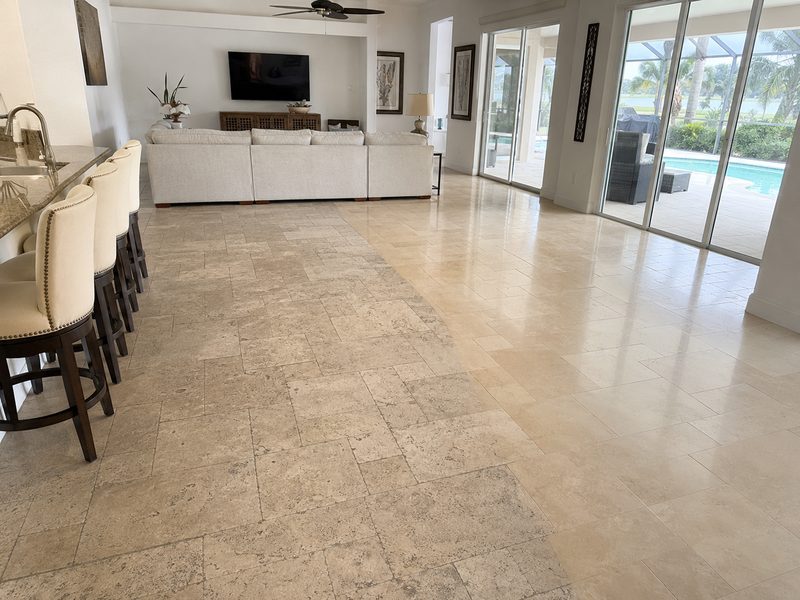
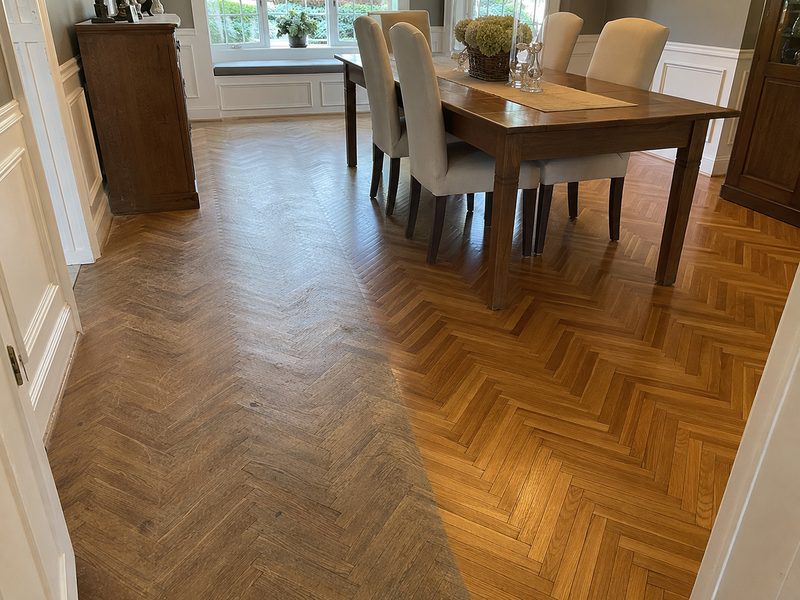
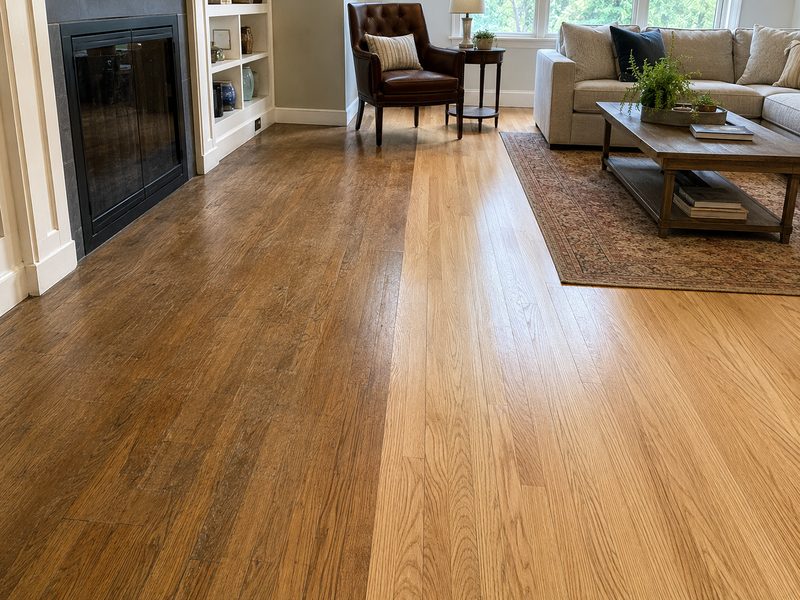
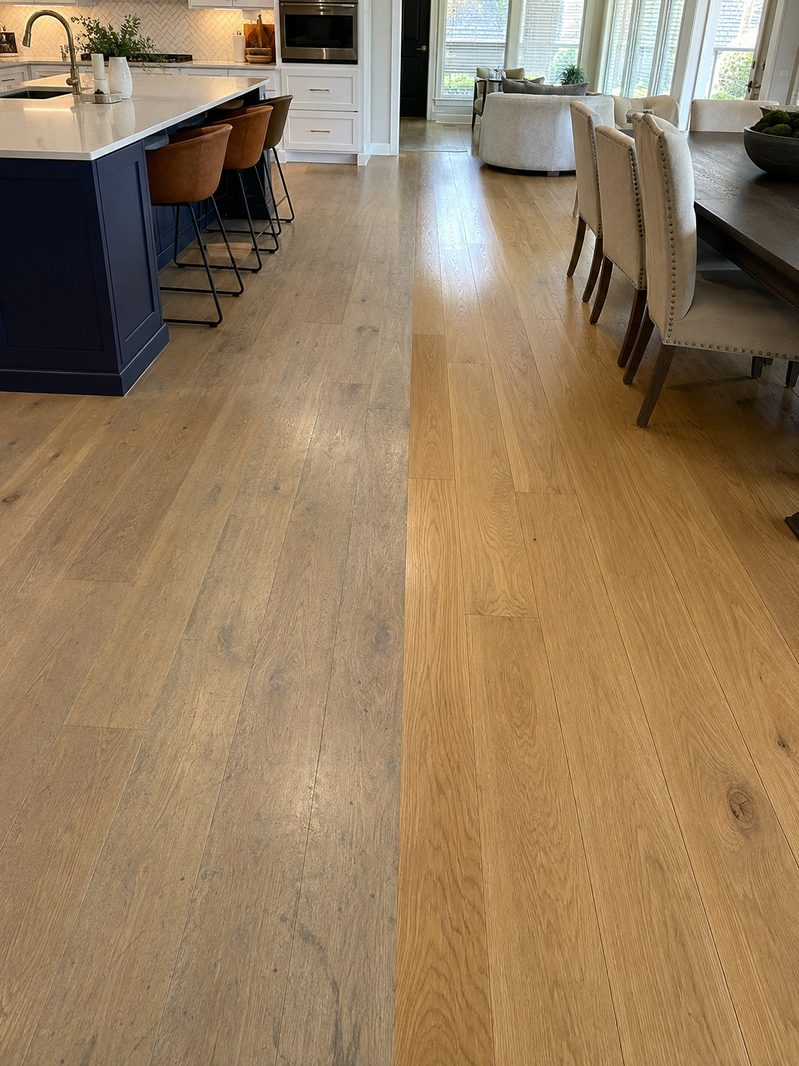
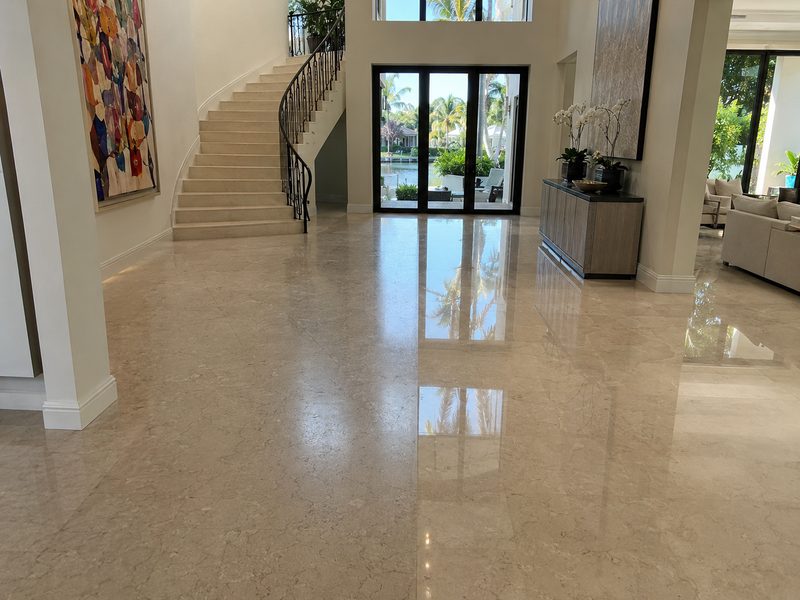
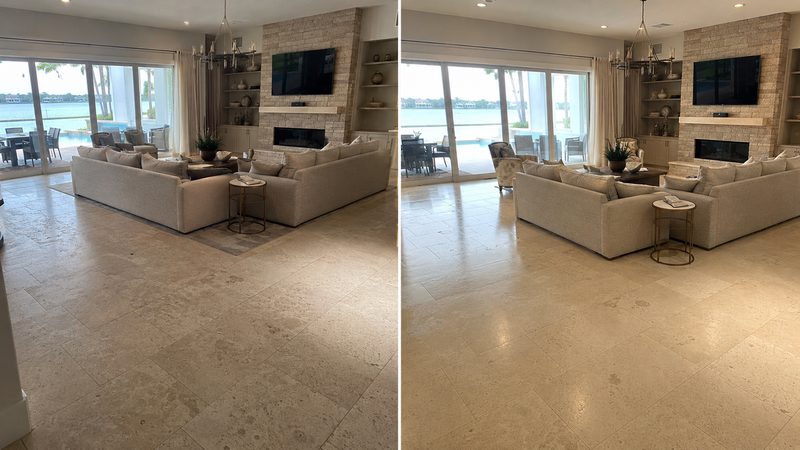
Illustrative examples of materials and sheen levels, not photographs of completed customer jobs.
Finish & Sheen Options
The sheen level changes both how the floor looks and how much upkeep it asks for.
Ground and sealed
Minimal refinement, maximum durability, lowest cost. Common in heavy plant areas where appearance is irrelevant.
Matte
Some light gain without glare. The usual specification for warehouse aisles.
Satin
Noticeable light reflection, chosen where the space is also shown to visiting customers.
Why Work With Us
Written estimate after inspection
We price the floor after seeing it, not from a phone description. The estimate sets out scope and the variables that could change it, so there are no discoveries mid-job.
Material identified before work starts
Marble, limestone and travertine look alike and behave differently under the same abrasive. We confirm what the floor actually is and test in a discreet area before committing to a method.
Dust controlled at source
Grinding and sanding run with HEPA-filtered extraction at the tool head and containment between work and occupied areas, because concrete dust is a health matter rather than a tidiness one.
Written maintenance plan on handover
You get the products, dilutions and intervals that keep the finish alive, since most floors we are called back to were damaged by cleaning rather than by use.
Industrial floor polishing in Plant City — FAQ
Yes. Those floors need wash-down-rated systems and food-safe materials rather than standard domestic specifications, and the work is normally scheduled around production — in practice that means nights or the agricultural off-season.
Usually because it was specified for foot traffic rather than for wash-down. Floors cleaned several times daily with hot water and degreaser strip a domestic-grade sealer quickly. Matching the system to the actual cleaning regime is what makes it last.
Frequently. Buildings around the historic downtown district often have heart pine or terrazzo under later commercial coverings, and the material underneath is commonly in better condition than what was laid over it.
Yes, and generally better than a coating, because there is no film to chip when a pallet is dropped. The vulnerable points are joints and cracks rather than the field of the slab, which is why joint repair is treated as core scope rather than an extra.
In most cases. Work is phased bay by bay with containment, coordinated around stock movement and shift patterns. It extends the calendar but avoids lost operating days.