Natural Stone Floor Restoration
Natural stone floor restoration returns granite, slate, limestone, sandstone and other stone floors to sound condition through cleaning, repair, grinding and refinishing matched to the specific stone.
- Free estimate, no obligation
- Priced after we see the floor — not over the phone
- Residential and commercial
- Granite
- Slate
- Limestone
Get a Natural stone restoration Estimate
Three quick steps, about a minute. No obligation.
Floor Types & Materials
Reviewed July 2026.
Materials we work with
- Granite
- Slate
- Limestone
- Sandstone
- Quartzite
- Flagstone
Where this is used
- Entryways
- Kitchens
- Bathrooms
- Patios and walkways
- Commercial lobbies
Problems We Solve
Coating failure
Topical sealers on slate and flagstone cloud, flake and trap moisture. Stripping them back and switching to a penetrating system resolves the recurring failure.
Deep soiling in texture
Cleft slate and tumbled stone hold dirt in their texture where mopping never reaches. Controlled deep cleaning lifts it without flattening the character of the stone.
Scratches and wear
Granite and quartzite scratch under grit despite their hardness. Refinishing removes the damage at its own depth.
Efflorescence and mineral deposits
White salt bloom and hard-water deposits are treated chemically according to the stone's tolerance, since the wrong chemistry damages the surface permanently.
Failed grout and lippage
Deteriorated grout and uneven tile edges are addressed before refinishing, because polishing an unstable floor achieves nothing lasting.
How It Works
-
Identify the stone
Granite, slate and limestone tolerate completely different chemistry and tooling. Misidentification is the most common cause of ruined stone floors, so this step is not a formality.
-
Test in a discreet area
A trial patch confirms how the specific floor responds before anything is applied across the whole area.
-
Strip and deep clean
Coatings, sealers and embedded soil are removed to reach the actual stone surface.
-
Repair
Chips, cracks and failed grout are made good and left to cure.
-
Grind, hone or refinish
The refinement route depends entirely on the stone and the desired look — some stones take a polish, others should never be polished.
-
Seal
A penetrating sealer suited to that stone's porosity, chosen so the floor can still breathe.
Typical timeline: 2–5 days depending on stone and scope
Identification and testing come first and are not rushed. Coating removal and repairs dominate the schedule on neglected floors, and sealer cure adds time before the floor is washed or walked heavily.
Looking after the floor afterwards
Use stone-safe cleaner
Acidic cleaners destroy limestone and damage grout. Neutral pH is the safe default across every stone we work on.
Avoid topical sealers
Film-forming products on textured stone are what caused the flaking in the first place. Penetrating sealers protect without trapping moisture.
Reseal on schedule
Sealer life varies by stone and traffic, and a simple water-bead test tells you when it has worn out.
Matting and prompt cleanup
Grit control at entries is the cheapest protection available for any stone floor.
Before & After: How These Finishes Look
What natural stone restoration looks like across different materials and sheen levels.
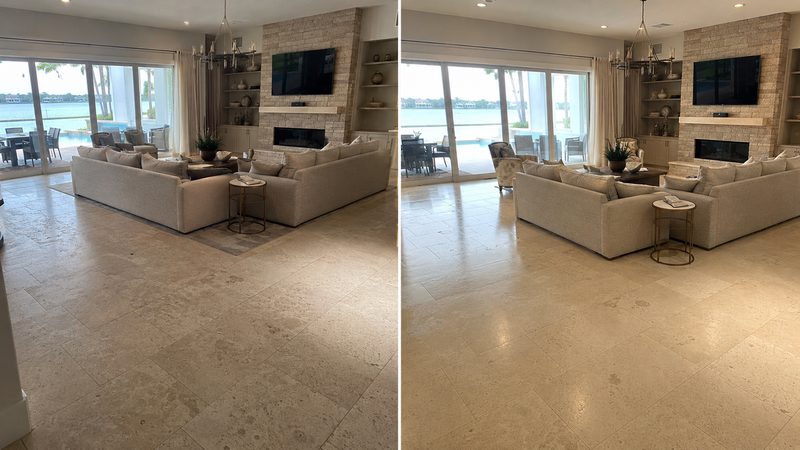
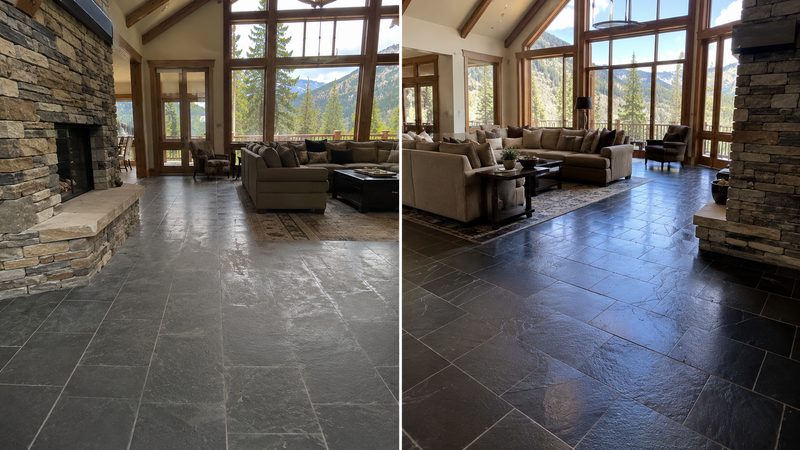
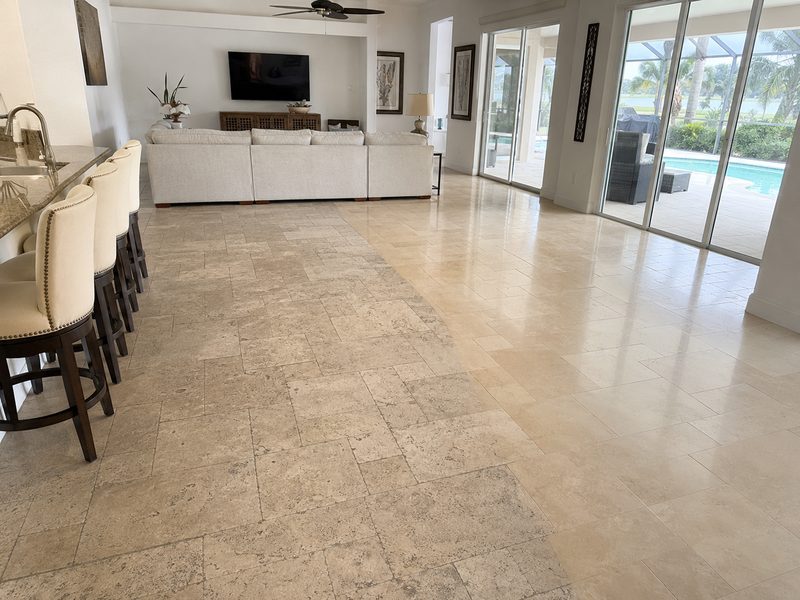
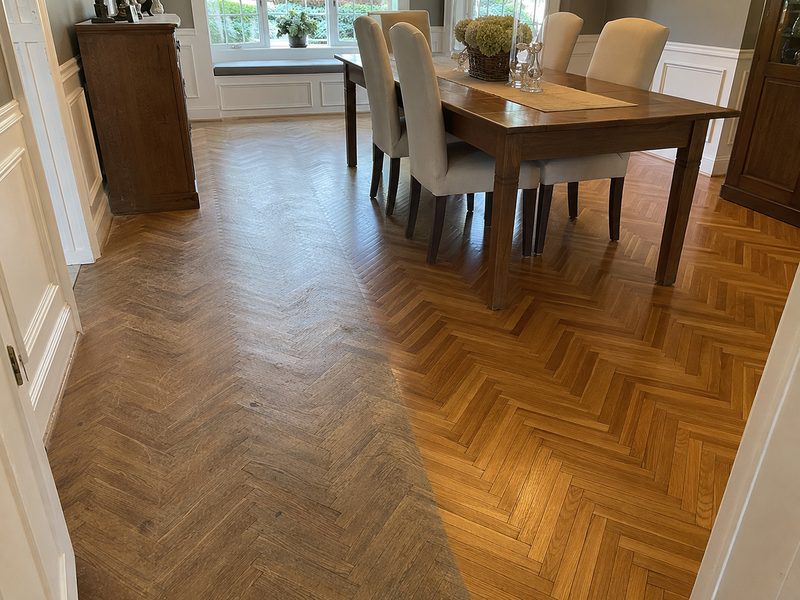
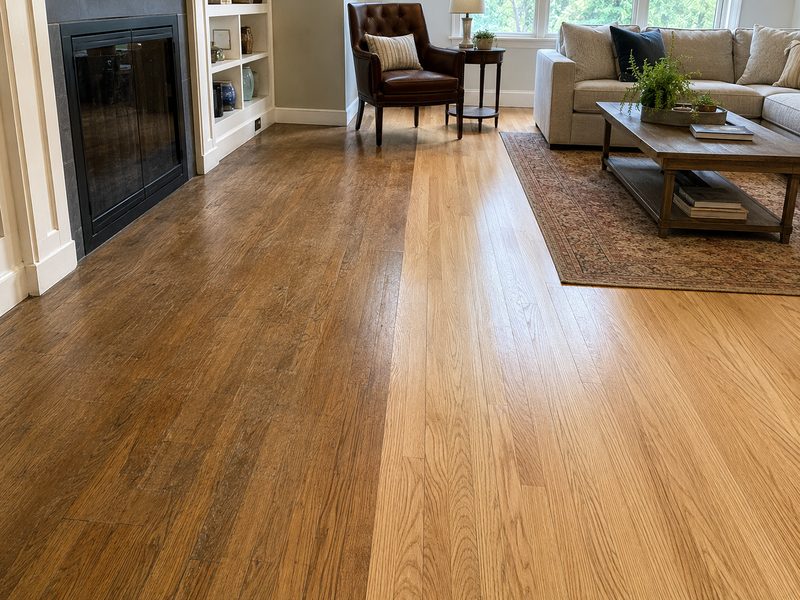
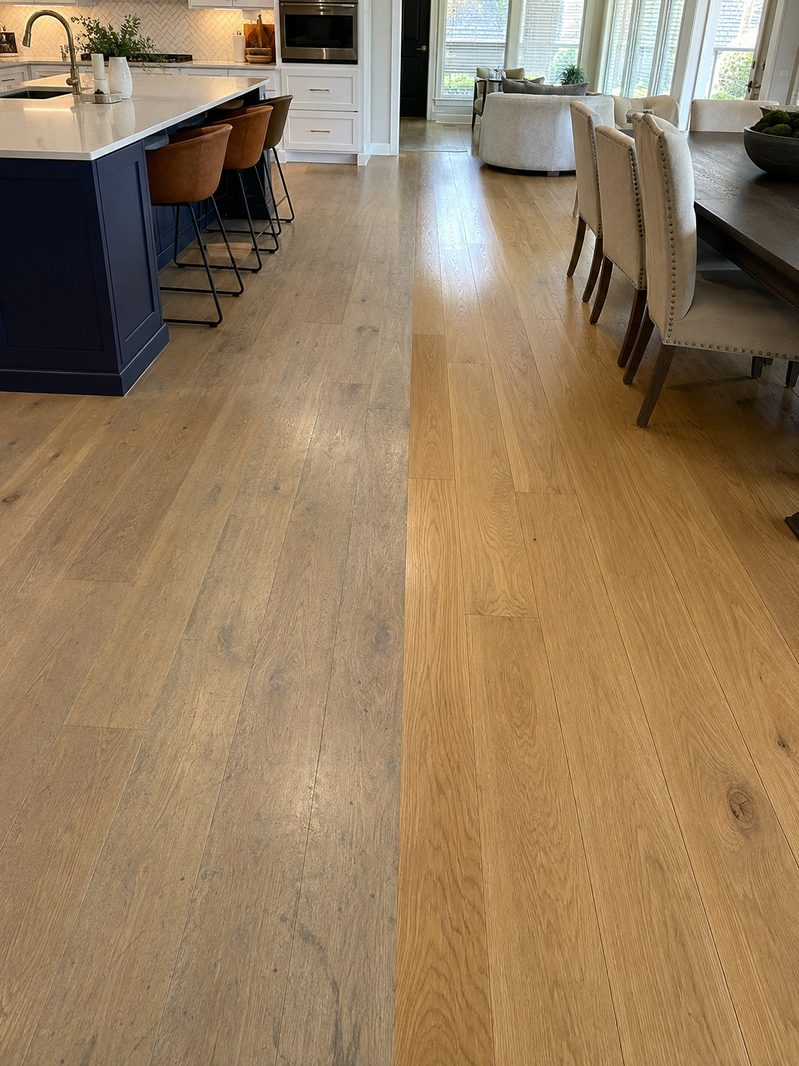
Illustrative examples of materials and sheen levels, not photographs of completed customer jobs.
Finish & Sheen Options
The sheen level changes both how the floor looks and how much upkeep it asks for.
Natural cleft
Retains slate and flagstone's original riven surface. Cleaned and sealed rather than ground flat.
Honed
Smooth and non-reflective. Suits limestone and sandstone, and hides wear well.
Satin
Light sheen that deepens colour without strong reflection.
Polished
Appropriate for granite and quartzite, which are hard enough to hold a true polish.
Residential & Commercial
Residential
- Slate entry halls
- Granite kitchen floors
- Limestone bathrooms
- Flagstone patios
- Stone staircases
Commercial
- Hotel and office lobbies
- Retail entrances
- Restaurant floors
- Civic and heritage buildings
What Affects the Cost
Every floor is priced after we have seen it. These are the variables that move the number.
Which stone
This drives everything. Granite needs hard tooling and time; soft limestone needs restraint to avoid overcutting. Two floors of identical size in different stone can differ substantially in price.
Coating removal
Layers of failed topical sealer, especially on slate, can take longer to remove than the refinishing itself.
Texture
Cleft and tumbled surfaces cannot be machine-refined the way flat stone can, so labour shifts to hand and specialist methods.
Repair scope
Regrouting, chip repair and lippage correction are priced separately from surface work.
Interior or exterior
Outdoor stone brings weathering, biological growth and drainage into scope.
Request a Natural stone restoration estimate
Send the material, approximate area and a few photos, and we will take it from there.
Get a Free EstimateWhere We Offer Natural Stone Floor Restoration
Select a state to see the counties and cities currently covered.
Why Work With Us
Written estimate after inspection
We price the floor after seeing it, not from a phone description. The estimate sets out scope and the variables that could change it, so there are no discoveries mid-job.
Material identified before work starts
Marble, limestone and travertine look alike and behave differently under the same abrasive. We confirm what the floor actually is and test in a discreet area before committing to a method.
Dust controlled at source
Grinding and sanding run with HEPA-filtered extraction at the tool head and containment between work and occupied areas, because concrete dust is a health matter rather than a tidiness one.
Written maintenance plan on handover
You get the products, dilutions and intervals that keep the finish alive, since most floors we are called back to were damaged by cleaning rather than by use.
Frequently Asked Questions
Appearance alone is unreliable — limestone is regularly sold as marble, and quartzite as granite. We identify by density, absorption and reaction testing in a discreet spot, because the wrong assumption leads to the wrong chemistry and permanent damage.
Generally not, and it should not be. Slate's appeal is its cleft texture, and grinding it flat destroys that. Slate is cleaned, repaired and sealed with a finish that enhances colour instead.
Almost always a topical film-forming sealer used where a penetrating one belonged. The film sits on top, loses adhesion and traps moisture beneath it. Stripping it and switching systems ends the cycle.
Usually, and often by a wide margin, since removal and disposal of existing stone is itself a significant cost. Replacement wins only where the stone is structurally failed or the substrate beneath it has moved.