Natural Stone Floor Restoration in Plant City, FL
Natural stone floor restoration returns granite, slate, limestone, sandstone and other stone floors to sound condition through cleaning, repair, grinding and refinishing matched to the specific stone. In Plant City, FL, that work most often means grease and organic build-up on quarry tile across Historic Downtown and Walden Lake and the surrounding Hillsborough County area. Service available in Plant City and the eastern Hillsborough County area, including agricultural and food-handling facilities. Reviewed July 2026.
- Free estimate, no obligation
- Priced after we see the floor — not over the phone
- Residential and commercial
- Quarry tile
- Sealed and polished concrete
- Ceramic tile
Natural stone restoration in Plant City
Three quick steps, about a minute. No obligation.
Floor Types We Work On in Plant City
Materials common in Plant City
- Quarry tile
- Sealed and polished concrete
- Ceramic tile
- Heart pine hardwood
- Terrazzo
Property types here
- Historic downtown commercial buildings
- Agricultural packing houses
- Rural and semi-rural homes
- Walden Lake residential
- Cold storage and warehousing
Floor Problems We See in Plant City
Grease and organic build-up on quarry tile
Packing house and commercial kitchen quarry tile accumulates a film that is genuinely a slip hazard, not just an appearance issue, and routine mopping does not cut it.
Sealer failure under wash-down
Sealers specified for domestic traffic fail quickly on floors washed several times a day, so material selection here is driven by cleaning regime rather than by foot traffic.
Historic downtown timber and terrazzo
Buildings around the downtown district hold original heart pine and terrazzo under later commercial floor coverings, often in better condition than the covering above them.
How Natural Stone Floor Restoration Works
-
Identify the stone
Granite, slate and limestone tolerate completely different chemistry and tooling. Misidentification is the most common cause of ruined stone floors, so this step is not a formality.
-
Test in a discreet area
A trial patch confirms how the specific floor responds before anything is applied across the whole area.
-
Strip and deep clean
Coatings, sealers and embedded soil are removed to reach the actual stone surface.
-
Repair
Chips, cracks and failed grout are made good and left to cure.
-
Grind, hone or refinish
The refinement route depends entirely on the stone and the desired look — some stones take a polish, others should never be polished.
-
Seal
A penetrating sealer suited to that stone's porosity, chosen so the floor can still breathe.
Typical timeline: 2–5 days depending on stone and scope
Identification and testing come first and are not rushed. Coating removal and repairs dominate the schedule on neglected floors, and sealer cure adds time before the floor is washed or walked heavily.
Looking after the floor afterwards
Use stone-safe cleaner
Acidic cleaners destroy limestone and damage grout. Neutral pH is the safe default across every stone we work on.
Avoid topical sealers
Film-forming products on textured stone are what caused the flaking in the first place. Penetrating sealers protect without trapping moisture.
Reseal on schedule
Sealer life varies by stone and traffic, and a simple water-bead test tells you when it has worn out.
Matting and prompt cleanup
Grit control at entries is the cheapest protection available for any stone floor.
Residential & Commercial Work in Plant City
Residential
- Heart pine refinishing in older Plant City homes
- Tile and grout restoration in Walden Lake
- Garage and workshop slab polishing
- Terrazzo restoration in mid-century houses
Commercial
- Packing house and food-handling floors
- Commercial kitchen quarry tile
- Historic downtown retail floors
- Cold storage and warehouse slabs
Plant City Service Area
Service available in Plant City and the eastern Hillsborough County area, including agricultural and food-handling facilities. Information on this page was last reviewed July 2026.
Neighborhoods we cover
- Historic Downtown
- Walden Lake
- Midway
- Springhead
ZIP codes served
- 33563
- 33565
- 33566
- 33567
Getting to you
Crews reach Plant City via I-4, US-92, State Road 39, working around Florida Strawberry Festival grounds and the surrounding area.
Local landmarks and reference points
- Florida Strawberry Festival grounds
- Plant City Union Depot
- Historic downtown district
How the Plant City climate affects floors
Inland agricultural humid subtropical, with the county's widest day-to-night temperature swing and heavy seasonal work traffic.
Agricultural soil and organic staining
Field soil tracked into packing houses and homes carries organic matter that stains porous floors differently from ordinary household soil, and it needs different chemistry to lift.
Wash-down cycles in food handling
Packing and processing floors are washed down constantly. Standing water and cleaning chemistry attack grout and sealers far faster here than in a domestic setting.
Cool-night condensation
Inland Plant City drops further overnight than the bayfront, and condensation on cool slabs in unconditioned buildings interferes with coating adhesion during the cooler months.
Plant City in numbers
We do not operate a walk-in location in Plant City. Work is scheduled by appointment and estimates are prepared on site.
Natural stone restoration in Plant City, FL
Send the material, area and a few photos — we will arrange an on-site inspection and a written estimate.
Get a Free EstimateWhat Affects the Cost in Plant City
Every floor is priced after we have seen it. These are the variables that move the number.
Which stone
This drives everything. Granite needs hard tooling and time; soft limestone needs restraint to avoid overcutting. Two floors of identical size in different stone can differ substantially in price.
Coating removal
Layers of failed topical sealer, especially on slate, can take longer to remove than the refinishing itself.
Texture
Cleft and tumbled surfaces cannot be machine-refined the way flat stone can, so labour shifts to hand and specialist methods.
Repair scope
Regrouting, chip repair and lippage correction are priced separately from surface work.
Interior or exterior
Outdoor stone brings weathering, biological growth and drainage into scope.
Plant City specifics
Food-safe materials and scheduling
Work in food-handling premises requires compliant products and wash-down-rated systems, and it is scheduled around production, which usually means nights or seasonal downtime.
Seasonal agricultural peaks
Packing facilities cannot pause during their season, so floor work concentrates into the off-season window and scheduling flexibility is limited.
Rural travel and site services
Outlying addresses can involve longer travel and, on some sites, limited power or water, which affects equipment planning.
Before & After: How These Finishes Look
Examples of the materials and sheen levels we work with in Plant City.
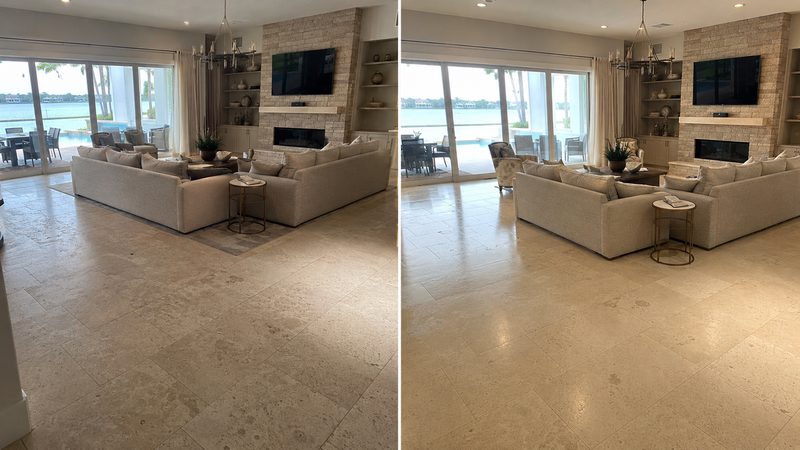
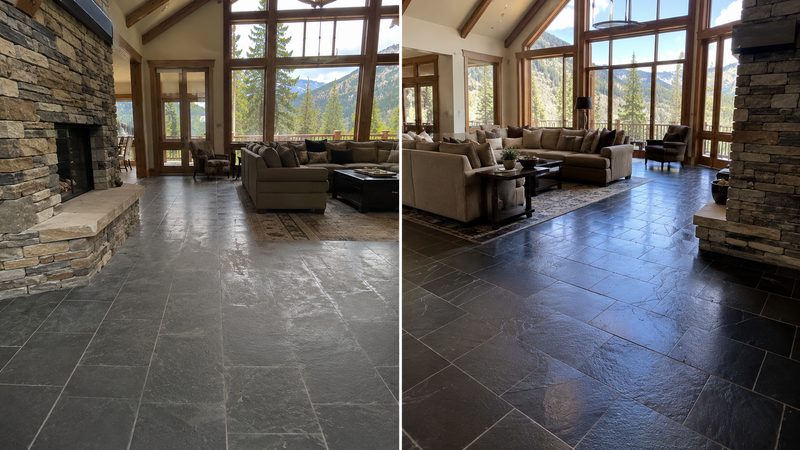
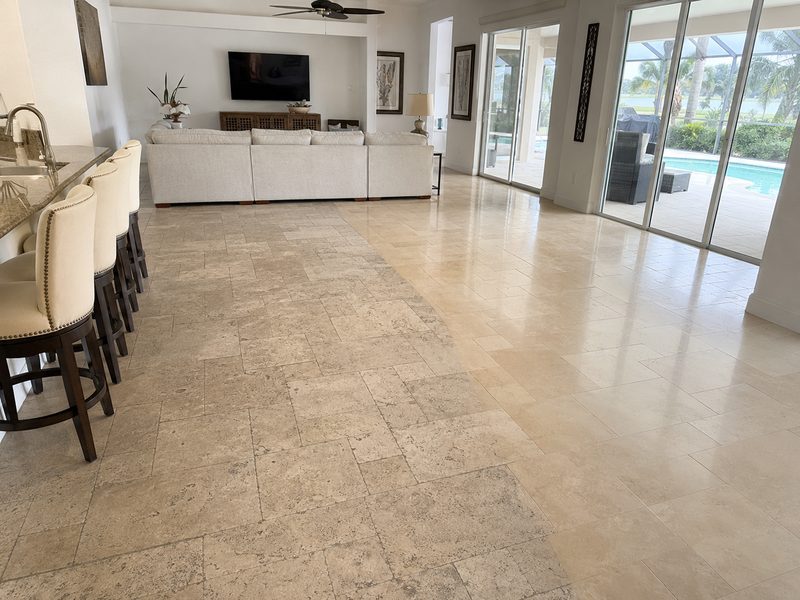
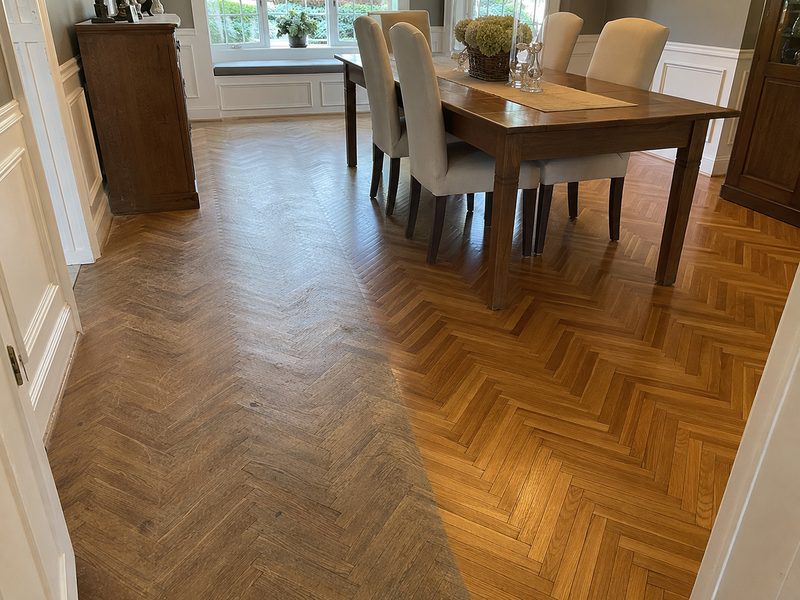
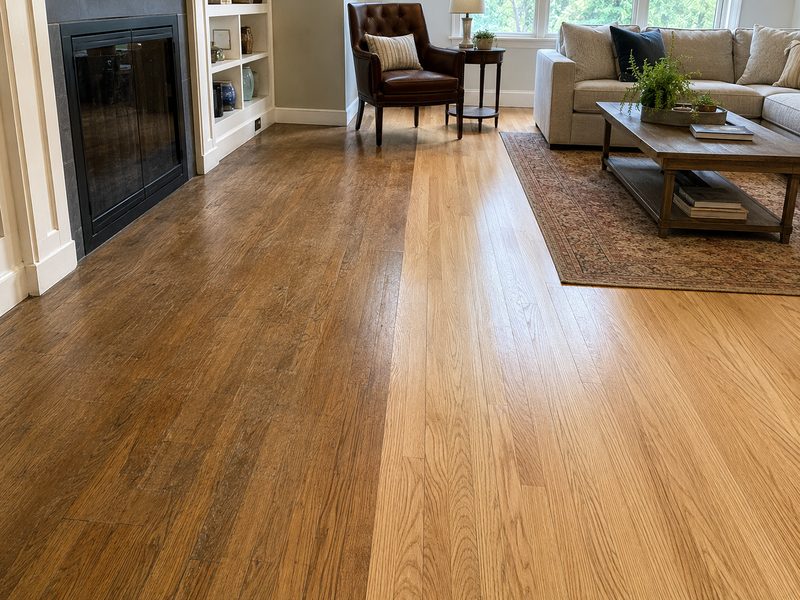
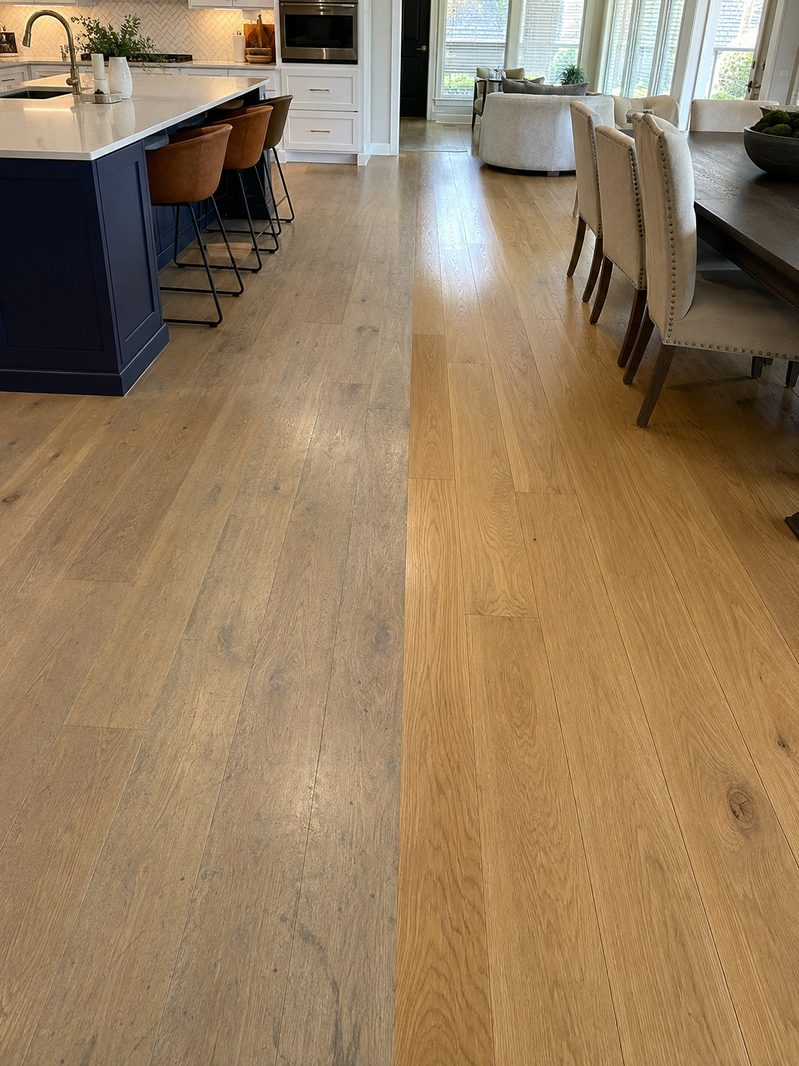
Illustrative examples of materials and sheen levels, not photographs of completed customer jobs.
Finish & Sheen Options
The sheen level changes both how the floor looks and how much upkeep it asks for.
Natural cleft
Retains slate and flagstone's original riven surface. Cleaned and sealed rather than ground flat.
Honed
Smooth and non-reflective. Suits limestone and sandstone, and hides wear well.
Satin
Light sheen that deepens colour without strong reflection.
Polished
Appropriate for granite and quartzite, which are hard enough to hold a true polish.
Why Work With Us
Written estimate after inspection
We price the floor after seeing it, not from a phone description. The estimate sets out scope and the variables that could change it, so there are no discoveries mid-job.
Material identified before work starts
Marble, limestone and travertine look alike and behave differently under the same abrasive. We confirm what the floor actually is and test in a discreet area before committing to a method.
Dust controlled at source
Grinding and sanding run with HEPA-filtered extraction at the tool head and containment between work and occupied areas, because concrete dust is a health matter rather than a tidiness one.
Written maintenance plan on handover
You get the products, dilutions and intervals that keep the finish alive, since most floors we are called back to were damaged by cleaning rather than by use.
Natural stone restoration in Plant City — FAQ
Yes. Those floors need wash-down-rated systems and food-safe materials rather than standard domestic specifications, and the work is normally scheduled around production — in practice that means nights or the agricultural off-season.
Usually because it was specified for foot traffic rather than for wash-down. Floors cleaned several times daily with hot water and degreaser strip a domestic-grade sealer quickly. Matching the system to the actual cleaning regime is what makes it last.
Frequently. Buildings around the historic downtown district often have heart pine or terrazzo under later commercial coverings, and the material underneath is commonly in better condition than what was laid over it.
Appearance alone is unreliable — limestone is regularly sold as marble, and quartzite as granite. We identify by density, absorption and reaction testing in a discreet spot, because the wrong assumption leads to the wrong chemistry and permanent damage.
Generally not, and it should not be. Slate's appeal is its cleft texture, and grinding it flat destroys that. Slate is cleaned, repaired and sealed with a finish that enhances colour instead.