Travertine Floor Polishing
Travertine floor polishing refines a porous calcium-based stone with diamond abrasives, addressing the open holes and etch damage that distinguish travertine from denser marble.
- Free estimate, no obligation
- Priced after we see the floor — not over the phone
- Residential and commercial
- Filled travertine
- Unfilled travertine
- Travertine tile and pavers
Get a Travertine polishing Estimate
Three quick steps, about a minute. No obligation.
Floor Types & Materials
Reviewed July 2026.
Materials we work with
- Filled travertine
- Unfilled travertine
- Travertine tile and pavers
- Limestone with similar porosity
Where this is used
- Entryways
- Bathrooms
- Kitchens
- Pool decks and patios
- Hotel and spa floors
Problems We Solve
Opening holes
Travertine is naturally full of voids. Factory fill pops out over time, leaving pits that collect dirt and catch heels. Refilling before polishing is the defining step of this service.
Etching
Like marble, travertine is calcium-based and dulls where acid touches it. Only refinishing the stone restores those areas.
Worn traffic paths
Entry routes lose their finish first. Polishing evens the surface back across the whole floor.
Absorbed staining
The stone's porosity makes it a fast absorber of oil and dye. Poulticing pulls stains before polishing locks them in.
How It Works
-
Assess fill and finish
We map how much fill has been lost and what finish the stone currently carries — that determines whether the job is mostly filling or mostly refinement.
-
Clean and strip
Topical sealers, waxes and soil come off so the work happens on bare stone.
-
Refill voids
Open holes are filled with colour-matched grout or resin. This must happen before polishing, or the polish simply lifts the new fill.
-
Honing
Progressive grits remove etching and scratches and level the new fill flush with the surrounding stone.
-
Polishing
Fine abrasives bring the stone to the specified sheen.
-
Impregnating sealer
Travertine's porosity makes sealing more important here than on denser stone.
Typical timeline: 2–4 days for most residential floors
Hole filling is the stage that drives the schedule, and fill needs to cure before honing can level it. Sealer adds a further cure window before the floor is washed or exposed to water.
Looking after the floor afterwards
Neutral cleaner only
Acidic cleaners etch travertine as readily as marble, and the porous surface makes damage spread faster.
Seal on schedule
Porosity means sealer matters more here than on dense stone, and it wears out on a predictable cycle.
Address lost fill early
An open hole collects grit and grows. Spot-filling as holes appear avoids a whole-floor refill later.
Mats and prompt spill cleanup
Grit scratches and standing liquid absorbs. Both are cheaper to prevent than to repair.
Before & After: How These Finishes Look
What travertine polishing looks like across different materials and sheen levels.
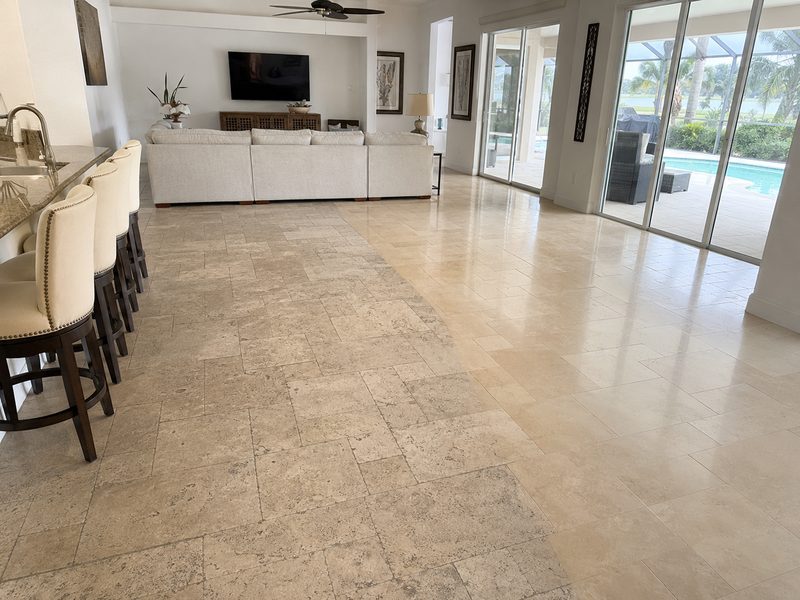
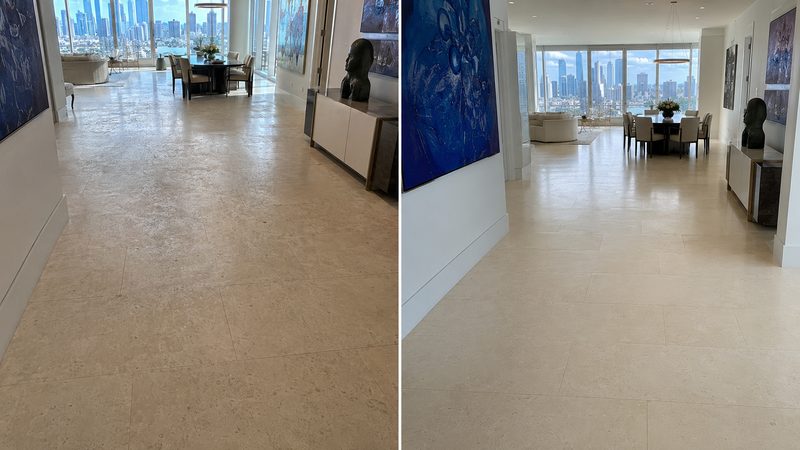
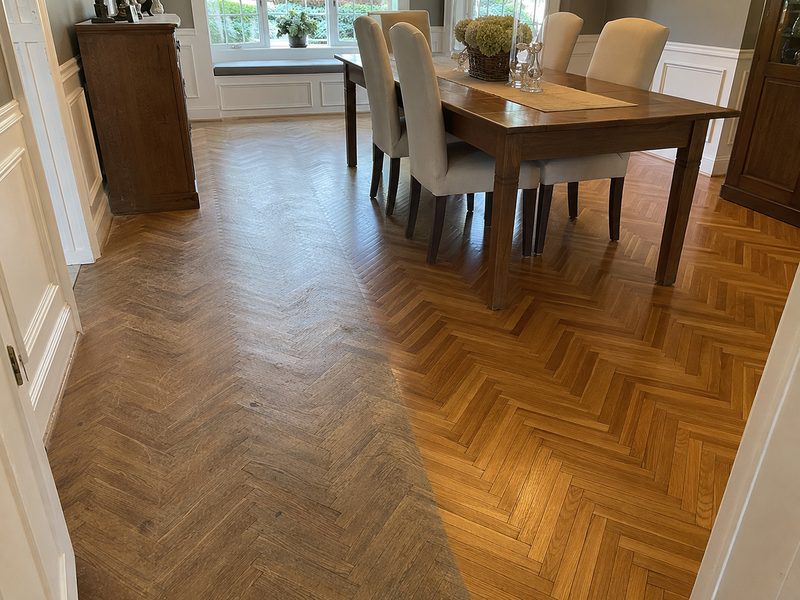
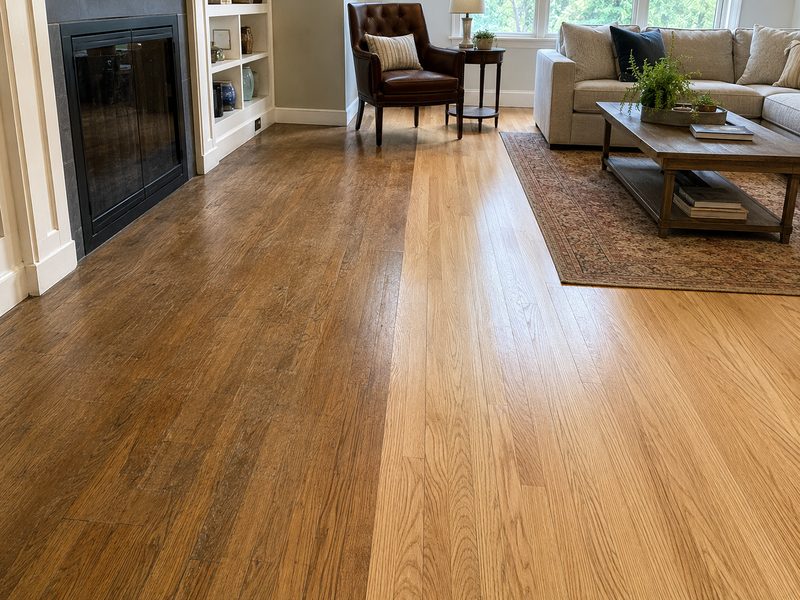
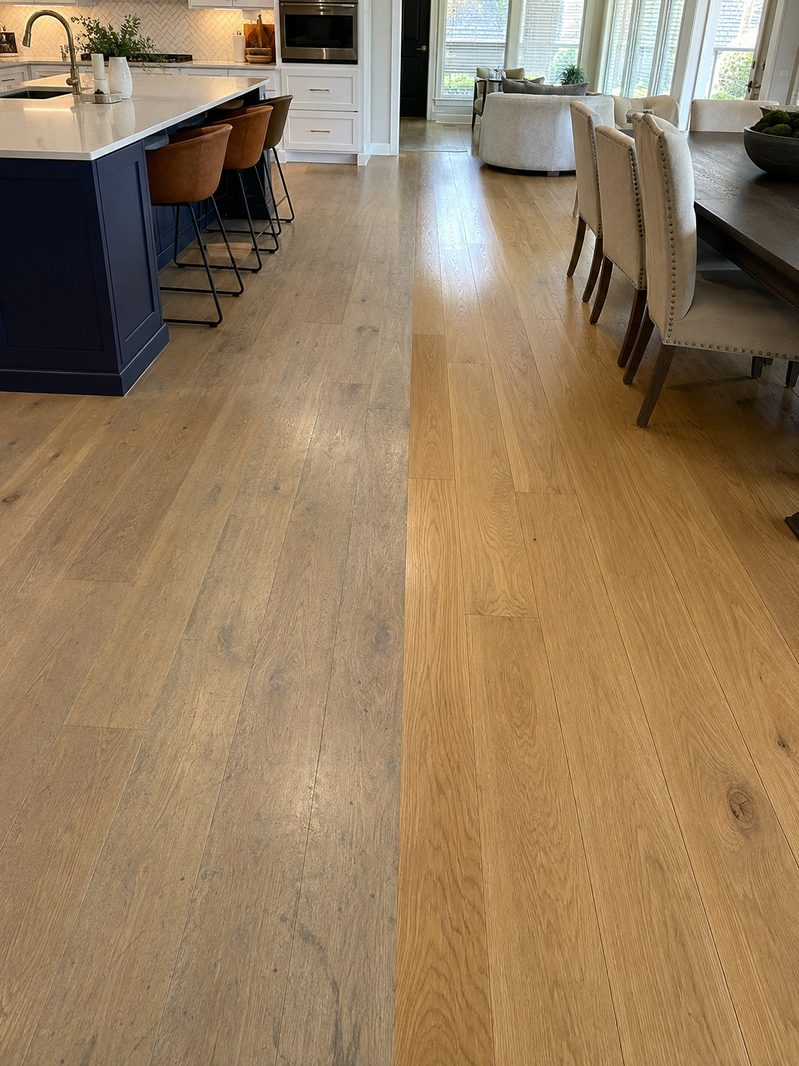
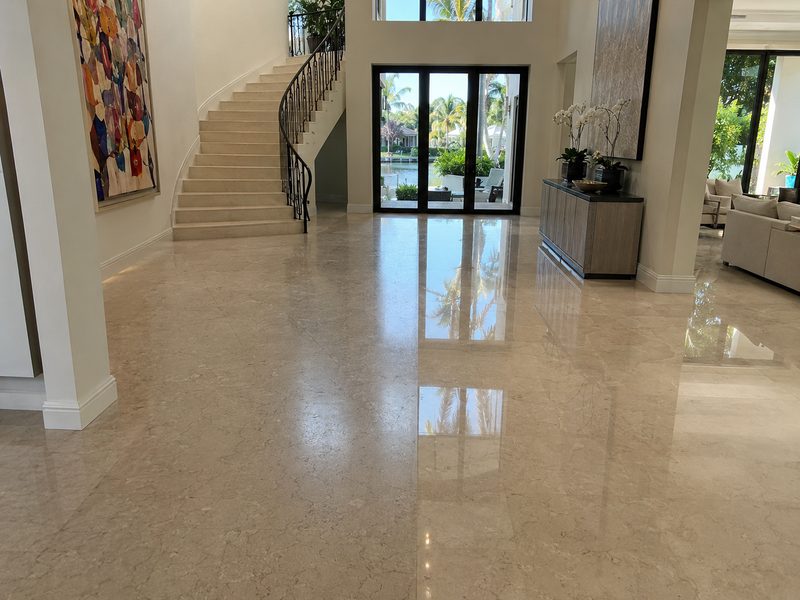
Illustrative examples of materials and sheen levels, not photographs of completed customer jobs.
Finish & Sheen Options
The sheen level changes both how the floor looks and how much upkeep it asks for.
Honed
The most common travertine finish. Natural, low-glare, and forgiving about the etching this stone inevitably picks up.
Satin
Gentle lustre that lifts the colour without turning the floor into a mirror.
Polished
Reflective and formal. Best suited to filled travertine in lower-traffic settings, since it shows both etching and any lost fill.
Residential & Commercial
Residential
- Entry halls
- Bathrooms and wet rooms
- Kitchen floors
- Pool surrounds
- Outdoor patios
Commercial
- Hotel lobbies and corridors
- Spa and wellness floors
- Restaurant entries
- Retail floors
What Affects the Cost
Every floor is priced after we have seen it. These are the variables that move the number.
Extent of hole filling
This is the dominant cost on most travertine jobs. A floor that has shed fill across its whole area needs filling square foot by square foot before any polishing begins.
Current finish versus target
Moving from honed to polished requires the full grit sequence; maintaining an existing hone is far lighter work.
Etch severity
Widespread etching forces a coarser start across the entire floor to keep appearance consistent.
Indoor or outdoor
Pool decks and patios bring weathering, biological growth and drainage considerations that interior floors do not.
Layout
Bathrooms, steps and pool coping carry a high proportion of hand work.
Request a Travertine polishing estimate
Send the material, approximate area and a few photos, and we will take it from there.
Get a Free EstimateWhere We Offer Travertine Floor Polishing
Select a state to see the counties and cities currently covered.
Why Work With Us
Written estimate after inspection
We price the floor after seeing it, not from a phone description. The estimate sets out scope and the variables that could change it, so there are no discoveries mid-job.
Material identified before work starts
Marble, limestone and travertine look alike and behave differently under the same abrasive. We confirm what the floor actually is and test in a discreet area before committing to a method.
Dust controlled at source
Grinding and sanding run with HEPA-filtered extraction at the tool head and containment between work and occupied areas, because concrete dust is a health matter rather than a tidiness one.
Written maintenance plan on handover
You get the products, dilutions and intervals that keep the finish alive, since most floors we are called back to were damaged by cleaning rather than by use.
Frequently Asked Questions
Travertine forms with natural voids, and tiles are usually sold pre-filled at the factory. That fill is not permanent — traffic, cleaning and mopping gradually work it loose. Refilling is routine maintenance for this stone rather than a sign of a defect.
Honed suits most installations. Travertine etches easily and loses fill in traffic, and both show far less on a matte surface. Polished travertine looks striking but demands more upkeep.
It can be refinished, but a high polish outdoors is usually a poor idea — it is slippery when wet and weathers unevenly. Honed finishes are the norm for pool decks and patios.
They are related but not the same. Both are calcium-based and both etch, but travertine is markedly more porous and voided, which is why filling is central to travertine work and irrelevant on marble.