Concrete Floor Polishing in Brandon, FL
Concrete floor polishing mechanically refines a slab with progressively finer diamond abrasives until the surface itself becomes the finish, producing a hard, light-reflective floor without coatings that peel. In Brandon, FL, that work most often means grout failure in large-format tile across Bloomingdale and Providence Lakes and the surrounding Hillsborough County area. Service available throughout Brandon and the surrounding unincorporated communities of Hillsborough County. Reviewed July 2026.
- Free estimate, no obligation
- Priced after we see the floor — not over the phone
- Residential and commercial
- Porcelain and ceramic tile
- Polished concrete
- Engineered hardwood
Concrete polishing in Brandon
Three quick steps, about a minute. No obligation.
Floor Types We Work On in Brandon
Materials common in Brandon
- Porcelain and ceramic tile
- Polished concrete
- Engineered hardwood
- Luxury vinyl plank
- Travertine
Property types here
- Suburban slab-on-grade homes
- Planned-community housing
- Retail plazas and big-box space
- Medical offices
- Light industrial and flex units
Floor Problems We See in Brandon
Grout failure in large-format tile
The area's newer housing is dominated by large-format porcelain, where a comparatively small amount of grout carries all the movement. Cracked and soiled joints are the most frequent complaint rather than problems with the tile itself.
Garage slabs baked by inland heat
Coatings applied in unconditioned Brandon garages during summer flash off faster than the label assumes, producing pinholing and adhesion defects that show up months later.
Sand-dulled entry areas
Polished and sealed floors near doorways lose sheen first in this part of the county, because construction sand tracked from surrounding developments abrades exactly where traffic concentrates.
How Concrete Floor Polishing Works
-
Assessment and moisture check
We read slab hardness, existing coatings and moisture behaviour, because those three decide the starting grit and whether polishing is viable at all.
-
Coating and adhesive removal
Old epoxy, glue and mastic come off with metal-bond diamonds so the refinement starts on bare concrete rather than on a buried film.
-
Grinding to flatten
Coarse metal-bond passes remove trowel ridges and set the level of aggregate exposure — cream, salt-and-pepper, or full stone.
-
Densification
A lithium or sodium silicate densifier reacts with free lime in the slab and hardens the surface so it can hold a polish.
-
Resin polishing
Successive resin-bond grits refine the surface to the agreed sheen, each pass removing the scratch pattern of the one before.
-
Sealing and burnish
A penetrating stain guard goes in below the surface, then a final burnish sets the sheen and the floor returns to service.
Typical timeline: 1–4 days for most residential and small commercial floors
A clean two-car garage is usually a single day. Coating removal, heavy patching or large commercial areas extend the schedule, and each densifier and sealer step carries its own cure window before traffic returns.
Looking after the floor afterwards
Dust mop daily
Grit tracked in from outside is what actually abrades a polished floor. A microfibre dust mop removes it before foot traffic grinds it into the surface.
Neutral-pH cleaner only
Acidic and highly alkaline cleaners etch the densified layer. A neutral cleaner and clean water hold the sheen far longer.
Entry matting
Matting at every exterior door catches the abrasive grit before it reaches the slab and measurably extends the interval between burnishes.
Periodic burnish
A high-speed burnish restores sheen lost to traffic without repeating the full grit sequence.
Residential & Commercial Work in Brandon
Residential
- Tile and grout restoration in Bloomingdale homes
- Garage slab polishing in Providence Lakes
- Engineered hardwood recoating in planned communities
- Lanai and patio concrete refinishing
Commercial
- Retail plaza floors along Brandon Boulevard
- Medical and dental office floors
- Restaurant tile and grout near Westfield Brandon
- Flex and light industrial slabs off Causeway Boulevard
Brandon Service Area
Service available throughout Brandon and the surrounding unincorporated communities of Hillsborough County. Information on this page was last reviewed July 2026.
Neighborhoods we cover
- Bloomingdale
- Providence Lakes
- Limona
- Brandon Valrico
- Lakewood Ridge
ZIP codes served
- 33508
- 33509
- 33510
- 33511
Getting to you
Crews reach Brandon via I-75, State Road 60 (Brandon Boulevard), Bloomingdale Avenue, working around Westfield Brandon and the surrounding area.
Local landmarks and reference points
- Westfield Brandon
- Brandon Regional Hospital
- Alafia River
How the Brandon climate affects floors
Inland humid subtropical — the same heat and wet season as Tampa but without direct coastal salt exposure.
Inland heat without sea breeze
Sitting back from the bay, Brandon loses the moderating sea breeze that South Tampa gets. Garages and lanais here run hotter, which matters for coating cure windows and for how quickly sealers flash off during application.
Sandy soil tracked from newer developments
Suburban construction across the Bloomingdale and Providence Lakes corridors keeps fine sand in circulation, and it is the dominant abrasive dulling polished floors in the area.
Alafia River floodplain moisture
Properties near the Alafia sit on ground that holds water after the summer wet season, keeping slab vapour drive elevated in those pockets.
Brandon in numbers
We do not operate a walk-in location in Brandon. Work is scheduled by appointment and estimates are prepared on site.
Concrete polishing in Brandon, FL
Send the material, area and a few photos — we will arrange an on-site inspection and a written estimate.
Get a Free EstimateWhat Affects the Cost in Brandon
Every floor is priced after we have seen it. These are the variables that move the number.
Slab condition
A clean, flat, uncoated slab starts at fine grit. One carrying old epoxy, carpet glue or deep patching needs removal passes first, and that removal is the single largest swing in price.
Aggregate exposure
A cream finish stays near the surface. Full stone exposure means grinding down several millimetres across the whole area, which multiplies both machine time and diamond wear.
Target sheen
Each additional grit step is another full pass over every square foot. Moving from satin to high gloss can add several passes.
Area and layout
Open floor plans polish fast. Rooms broken up by columns, fixed racking and tight corners force hand-edge work, which runs far slower per square foot.
Site access and hours
Stair-only access, live retail hours or night work all change crew scheduling and equipment handling.
Brandon specifics
Newer stock, fewer surprises
Brandon's housing is largely recent slab-on-grade construction with a single floor covering, so removal scope is more predictable here than in Tampa's historic districts and quotes hold more reliably.
Summer scheduling in unconditioned spaces
Garage and lanai work in peak summer may need early-morning scheduling or temporary climate control so materials cure as specified, which affects crew hours.
Retail corridor access hours
Work in the Brandon Boulevard retail corridor is generally scheduled outside trading hours, shifting labour to evenings and weekends.
Before & After: How These Finishes Look
Examples of the materials and sheen levels we work with in Brandon.
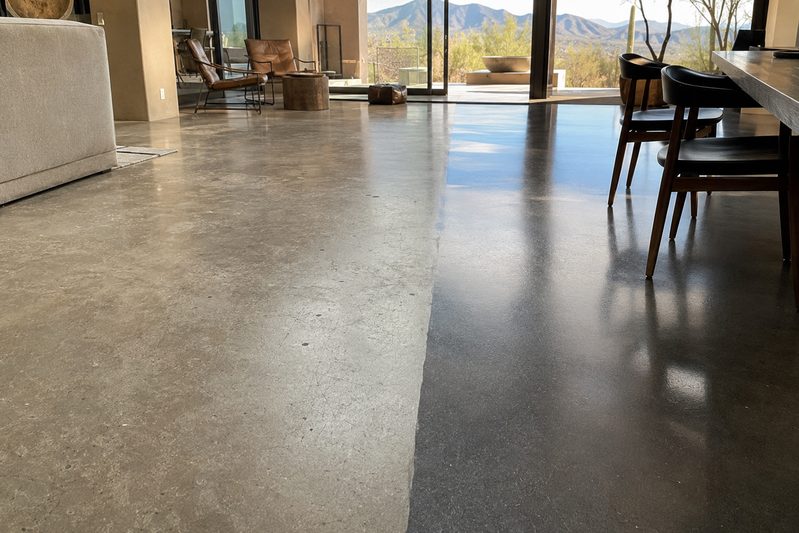
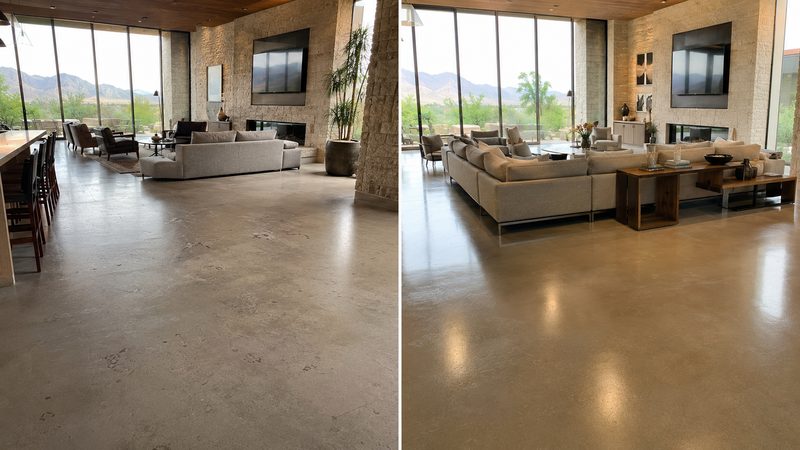
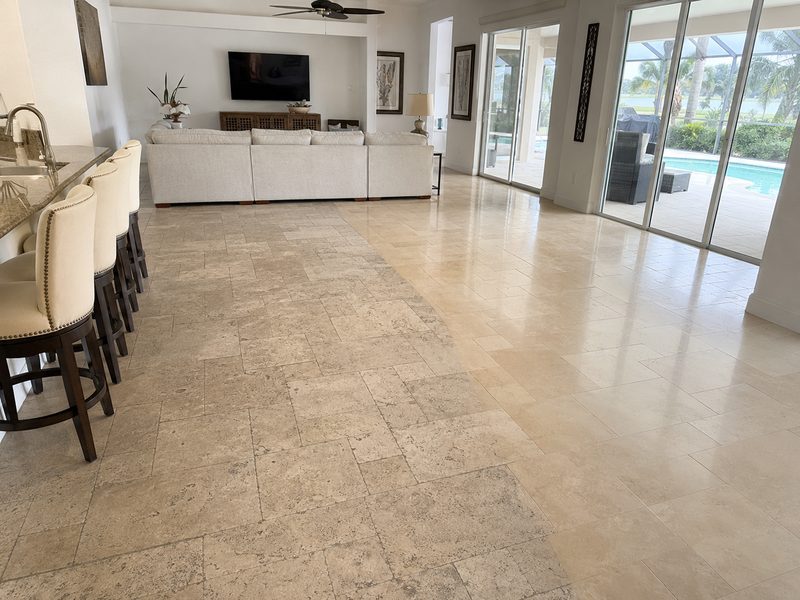
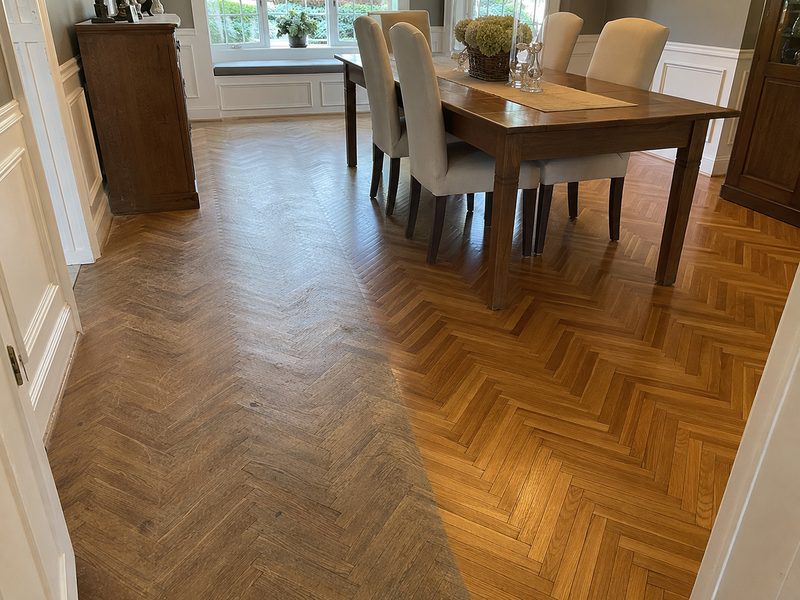
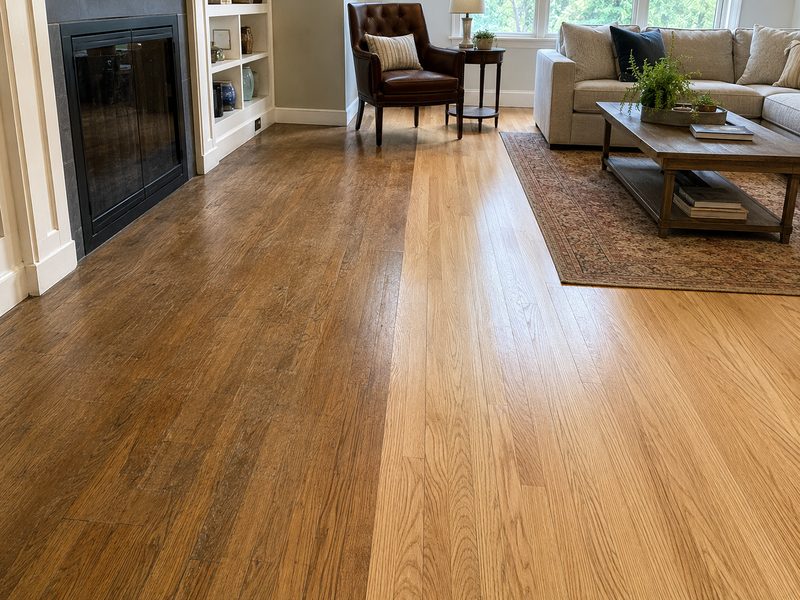
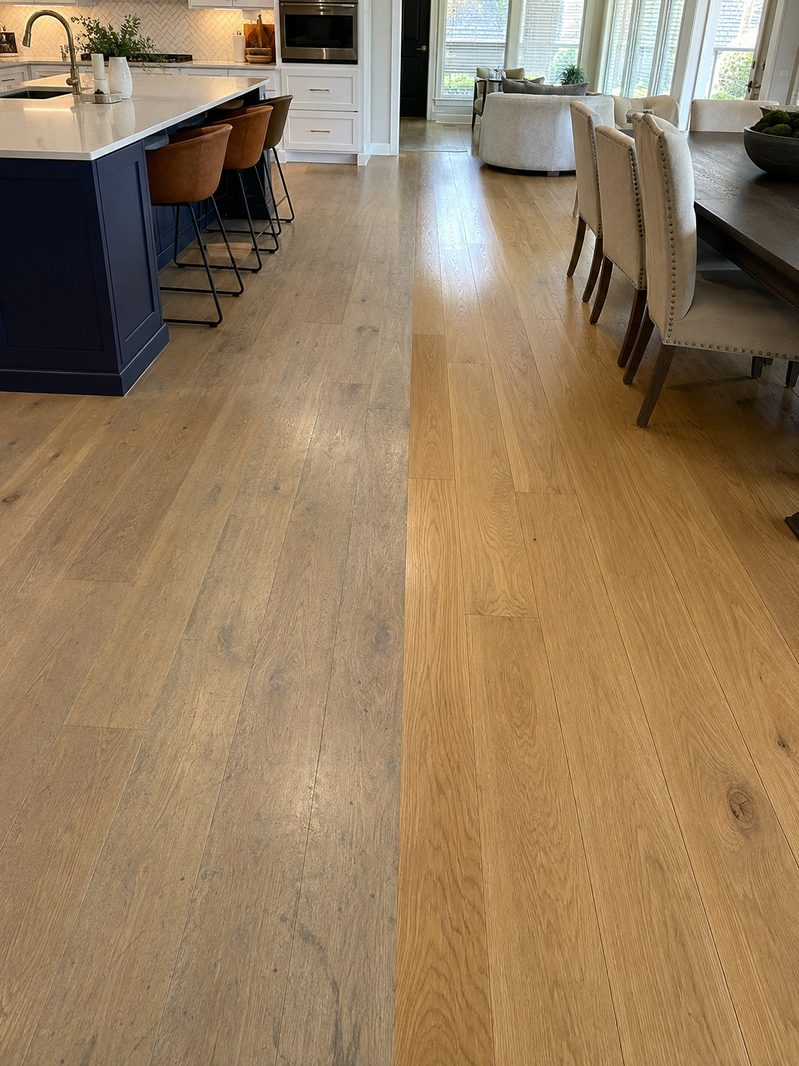
Illustrative examples of materials and sheen levels, not photographs of completed customer jobs.
Finish & Sheen Options
The sheen level changes both how the floor looks and how much upkeep it asks for.
Matte
Low reflection, hides traffic patterns, favoured in workshops and industrial aisles where glare is a hazard.
Satin
Soft even lustre with visible depth. The usual choice for residential basements, garages and back-of-house retail.
Polished
Clear reflection of overhead light without mirror distortion. Common in showrooms and cafés.
High gloss
Mirror-level reflection that shows off aggregate. Highest maintenance expectation and the most sensitive to a dirty entry.
Why Work With Us
Written estimate after inspection
We price the floor after seeing it, not from a phone description. The estimate sets out scope and the variables that could change it, so there are no discoveries mid-job.
Material identified before work starts
Marble, limestone and travertine look alike and behave differently under the same abrasive. We confirm what the floor actually is and test in a discreet area before committing to a method.
Dust controlled at source
Grinding and sanding run with HEPA-filtered extraction at the tool head and containment between work and occupied areas, because concrete dust is a health matter rather than a tidiness one.
Written maintenance plan on handover
You get the products, dilutions and intervals that keep the finish alive, since most floors we are called back to were damaged by cleaning rather than by use.
Concrete polishing in Brandon — FAQ
No. Brandon is an unincorporated census-designated place in Hillsborough County with no municipal government of its own, sitting roughly twelve miles east of downtown Tampa. Permitting and county services run through Hillsborough County rather than the City of Tampa, which occasionally matters for commercial work.
Large-format porcelain, which dominates newer Brandon housing, leaves relatively little grout to absorb slab movement. The joints take the stress the tile does not, so they fail first. Replacing the grout addresses the symptom; where movement continues, the joint layout itself needs review.
Outside peak summer heat where possible. Unconditioned Brandon garages get hot enough that coatings flash off faster than intended, which causes adhesion defects. Early-morning application or temporary climate control resolves it.
A dry polished floor typically tests within the same slip range as other hard surfaces, because polishing flattens the surface rather than adding a slick film. Wet floors are a different matter, which is why entry matting and prompt spill cleanup carry more weight than the sheen level itself.
Most can, but not all. Very soft or heavily spalled slabs, slabs with severe moisture drive, and thin overlays over unstable substrate may not hold a polish. That is what the initial hardness and moisture assessment determines.