Concrete Floor Polishing in Tampa, FL
Concrete floor polishing mechanically refines a slab with progressively finer diamond abrasives until the surface itself becomes the finish, producing a hard, light-reflective floor without coatings that peel. In Tampa, FL, that work most often means terrazzo hidden under carpet across Hyde Park and Seminole Heights and the surrounding Hillsborough County area. Service available across Tampa and surrounding Hillsborough County communities, scheduled by appointment. Reviewed July 2026.
- Free estimate, no obligation
- Priced after we see the floor — not over the phone
- Residential and commercial
- Terrazzo
- Polished concrete
- Heart pine and oak hardwood
Concrete polishing in Tampa
Three quick steps, about a minute. No obligation.
Floor Types We Work On in Tampa
Materials common in Tampa
- Terrazzo
- Polished concrete
- Heart pine and oak hardwood
- Porcelain tile
- Marble
- Quarry tile
Property types here
- Craftsman bungalows
- Mid-century slab-on-grade homes
- Downtown condominium towers
- Ybor City brick commercial buildings
- Westshore office space
- Restaurants and bars
Floor Problems We See in Tampa
Terrazzo hidden under carpet
Seminole Heights and South Tampa houses from the 1950s and 60s routinely have original terrazzo beneath later carpet or vinyl. It usually surfaces during renovation, and it is far more often restorable than owners expect.
Heart pine worn through
Bungalows in Hyde Park and Tampa Heights have original heart pine that has been recoated repeatedly. Where the wear layer has finally failed, recoating seals the damage in and sanding is the honest route.
Coating failure on unbarriered slabs
Garage and basement-level epoxy applied without a moisture test is the most common callout in older Tampa housing, and the fix is usually to stop coating the slab and polish it instead.
How Concrete Floor Polishing Works
-
Assessment and moisture check
We read slab hardness, existing coatings and moisture behaviour, because those three decide the starting grit and whether polishing is viable at all.
-
Coating and adhesive removal
Old epoxy, glue and mastic come off with metal-bond diamonds so the refinement starts on bare concrete rather than on a buried film.
-
Grinding to flatten
Coarse metal-bond passes remove trowel ridges and set the level of aggregate exposure — cream, salt-and-pepper, or full stone.
-
Densification
A lithium or sodium silicate densifier reacts with free lime in the slab and hardens the surface so it can hold a polish.
-
Resin polishing
Successive resin-bond grits refine the surface to the agreed sheen, each pass removing the scratch pattern of the one before.
-
Sealing and burnish
A penetrating stain guard goes in below the surface, then a final burnish sets the sheen and the floor returns to service.
Typical timeline: 1–4 days for most residential and small commercial floors
A clean two-car garage is usually a single day. Coating removal, heavy patching or large commercial areas extend the schedule, and each densifier and sealer step carries its own cure window before traffic returns.
Looking after the floor afterwards
Dust mop daily
Grit tracked in from outside is what actually abrades a polished floor. A microfibre dust mop removes it before foot traffic grinds it into the surface.
Neutral-pH cleaner only
Acidic and highly alkaline cleaners etch the densified layer. A neutral cleaner and clean water hold the sheen far longer.
Entry matting
Matting at every exterior door catches the abrasive grit before it reaches the slab and measurably extends the interval between burnishes.
Periodic burnish
A high-speed burnish restores sheen lost to traffic without repeating the full grit sequence.
Residential & Commercial Work in Tampa
Residential
- Restoring terrazzo uncovered during a Seminole Heights renovation
- Refinishing heart pine in Hyde Park bungalows
- Polishing garage slabs in South Tampa
- Marble foyer restoration in waterfront condominiums
Commercial
- Ybor City restaurant and bar floors
- Downtown and Channelside lobby stone
- Westshore office common areas
- Retail entries along Dale Mabry Highway
Tampa Service Area
Service available across Tampa and surrounding Hillsborough County communities, scheduled by appointment. Information on this page was last reviewed July 2026.
Neighborhoods we cover
- Hyde Park
- Seminole Heights
- Ybor City
- Davis Islands
- Westshore
- Palma Ceia
- Channelside
- Tampa Heights
ZIP codes served
- 33602
- 33603
- 33604
- 33605
- 33606
- 33609
- 33611
- 33612
- 33629
Getting to you
Crews reach Tampa via I-275, I-4, Dale Mabry Highway, working around Tampa Riverwalk and the surrounding area.
Local landmarks and reference points
- Tampa Riverwalk
- Ybor City Historic District
- Amalie Arena
- Tampa Theatre
- Sulphur Springs Water Tower
How the Tampa climate affects floors
Humid subtropical on Tampa Bay, with a pronounced summer wet season and salt air along the waterfront neighbourhoods.
Waterfront salt exposure
Bayshore Boulevard, Davis Islands and Channelside properties sit directly on the water, and airborne salt leaves deposits on stone and concrete entries that ordinary mopping redistributes rather than removes.
Vapour drive under historic slabs
Mid-century slabs in Seminole Heights and Tampa Heights were poured with little or no vapour barrier by current standards, so moisture rises steadily through them and lifts film-forming coatings.
Wet-season entry wear
Afternoon storms from June through September push water and sand through doorways daily, concentrating abrasion in the first few metres of retail and restaurant floors along Kennedy and Dale Mabry.
Tampa in numbers
We do not operate a walk-in location in Tampa. Work is scheduled by appointment and estimates are prepared on site.
Concrete polishing in Tampa, FL
Send the material, area and a few photos — we will arrange an on-site inspection and a written estimate.
Get a Free EstimateWhat Affects the Cost in Tampa
Every floor is priced after we have seen it. These are the variables that move the number.
Slab condition
A clean, flat, uncoated slab starts at fine grit. One carrying old epoxy, carpet glue or deep patching needs removal passes first, and that removal is the single largest swing in price.
Aggregate exposure
A cream finish stays near the surface. Full stone exposure means grinding down several millimetres across the whole area, which multiplies both machine time and diamond wear.
Target sheen
Each additional grit step is another full pass over every square foot. Moving from satin to high gloss can add several passes.
Area and layout
Open floor plans polish fast. Rooms broken up by columns, fixed racking and tight corners force hand-edge work, which runs far slower per square foot.
Site access and hours
Stair-only access, live retail hours or night work all change crew scheduling and equipment handling.
Tampa specifics
Layered coverings in historic districts
Hyde Park and Seminole Heights properties frequently hide three or four generations of floor covering. Removal scope on these addresses cannot be fixed precisely until the top layer comes up.
Downtown and Ybor access
Loading restrictions, metered parking and noise ordinances in the downtown core and Ybor City add mobilisation time that suburban addresses do not carry.
Historic district requirements
Work in designated historic areas can carry review requirements affecting materials and methods, which is worth establishing before scheduling rather than after.
Before & After: How These Finishes Look
Examples of the materials and sheen levels we work with in Tampa.
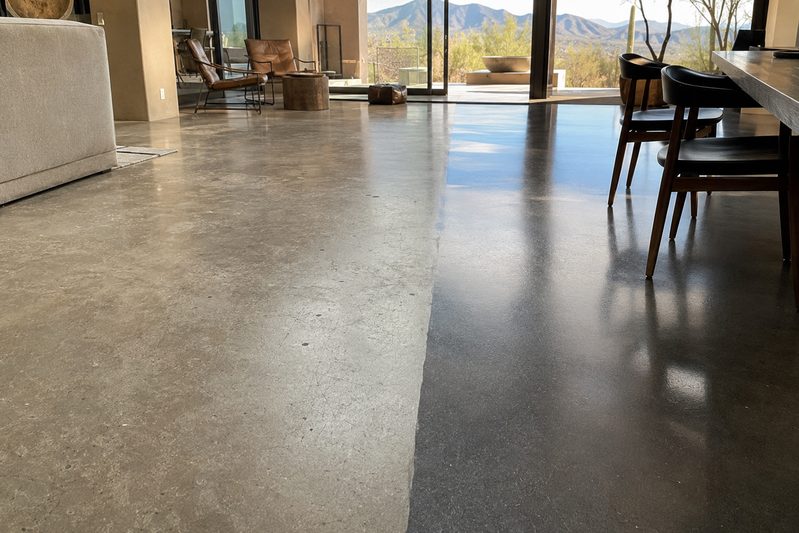
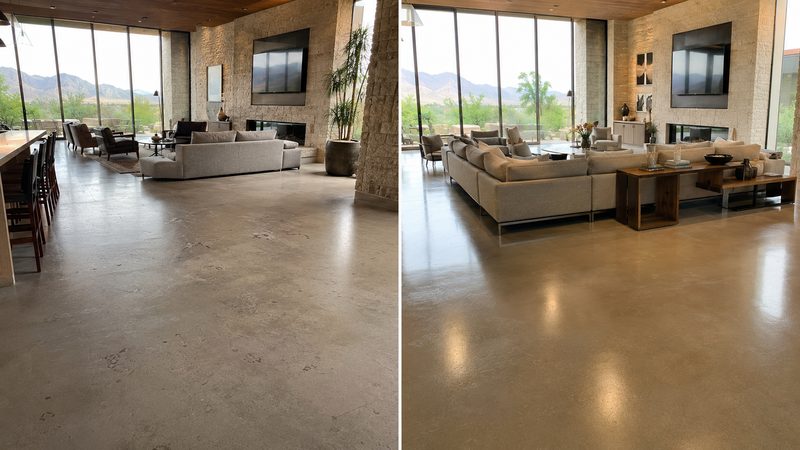
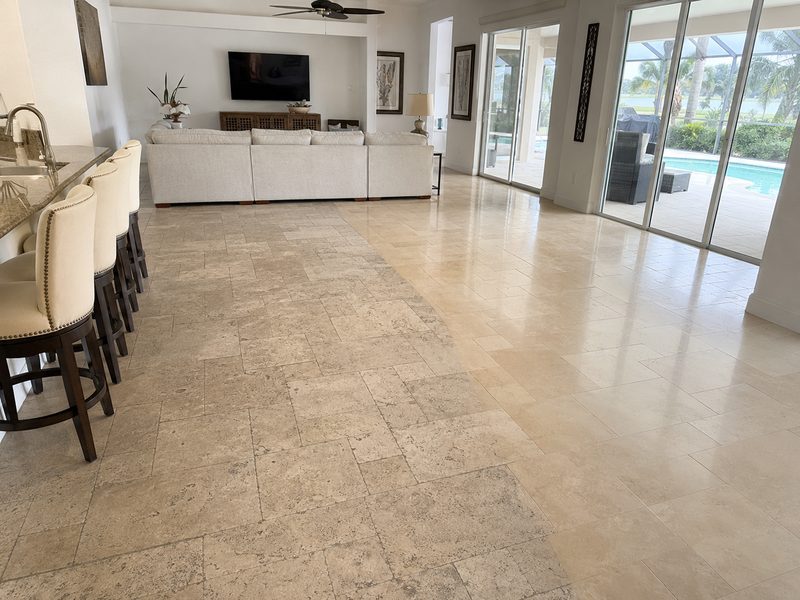
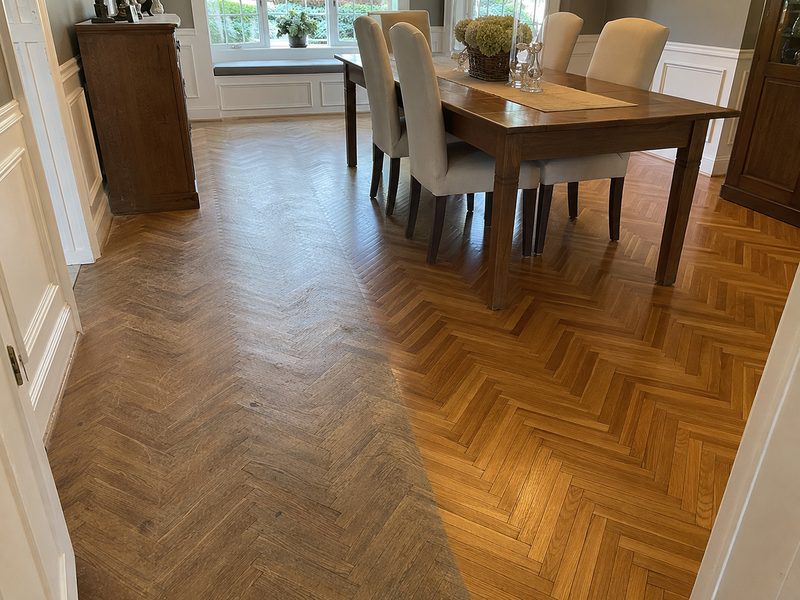
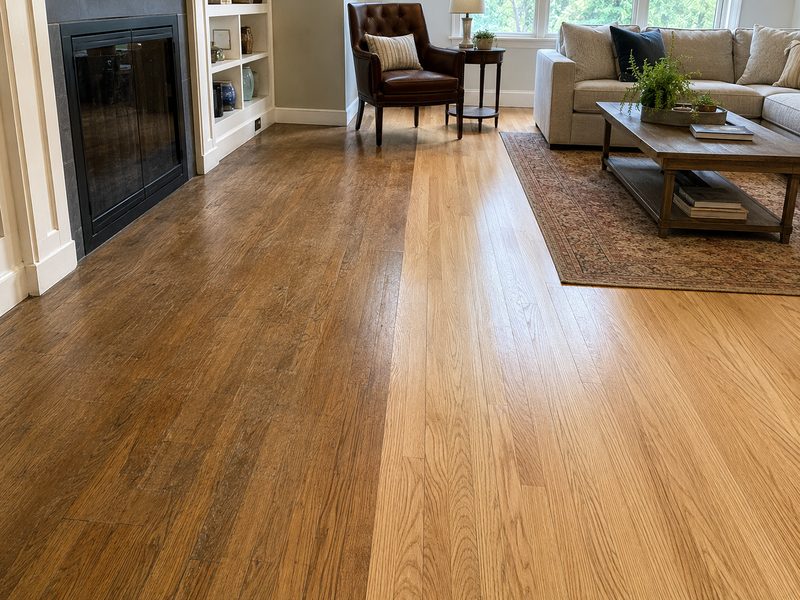
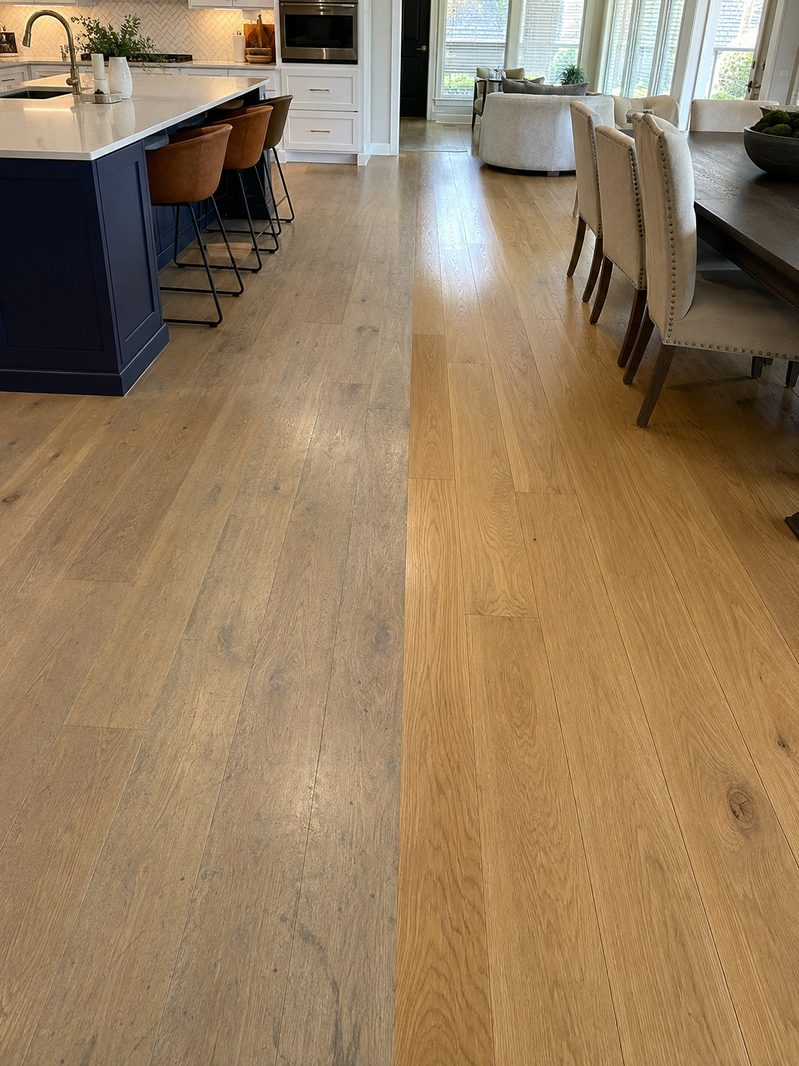
Illustrative examples of materials and sheen levels, not photographs of completed customer jobs.
Finish & Sheen Options
The sheen level changes both how the floor looks and how much upkeep it asks for.
Matte
Low reflection, hides traffic patterns, favoured in workshops and industrial aisles where glare is a hazard.
Satin
Soft even lustre with visible depth. The usual choice for residential basements, garages and back-of-house retail.
Polished
Clear reflection of overhead light without mirror distortion. Common in showrooms and cafés.
High gloss
Mirror-level reflection that shows off aggregate. Highest maintenance expectation and the most sensitive to a dirty entry.
Why Work With Us
Written estimate after inspection
We price the floor after seeing it, not from a phone description. The estimate sets out scope and the variables that could change it, so there are no discoveries mid-job.
Material identified before work starts
Marble, limestone and travertine look alike and behave differently under the same abrasive. We confirm what the floor actually is and test in a discreet area before committing to a method.
Dust controlled at source
Grinding and sanding run with HEPA-filtered extraction at the tool head and containment between work and occupied areas, because concrete dust is a health matter rather than a tidiness one.
Written maintenance plan on handover
You get the products, dilutions and intervals that keep the finish alive, since most floors we are called back to were damaged by cleaning rather than by use.
Concrete polishing in Tampa — FAQ
Very likely. Terrazzo was standard in Tampa residential construction through the 1950s and 60s, and floors uncovered today are usually structurally sound with cosmetic damage — old adhesive, wax build-up and yellowing rather than failure. Stripping and grinding typically reveals usable material underneath.
Almost always moisture. Slabs poured before modern vapour barrier practice let moisture rise continuously, and that pressure lifts any film-forming coating from underneath regardless of surface preparation. Polishing the slab avoids the problem because there is no film to lift.
Yes. Work in Hyde Park, Ybor City and other designated areas may carry review requirements affecting materials or methods, so we confirm what applies to the specific address before scheduling.
A dry polished floor typically tests within the same slip range as other hard surfaces, because polishing flattens the surface rather than adding a slick film. Wet floors are a different matter, which is why entry matting and prompt spill cleanup carry more weight than the sheen level itself.
Most can, but not all. Very soft or heavily spalled slabs, slabs with severe moisture drive, and thin overlays over unstable substrate may not hold a polish. That is what the initial hardness and moisture assessment determines.